Brepols
Brepols is an international academic publisher of works in the humanities, with a particular focus in history, archaeology, history of the arts, language and literature, and critical editions of source works.3101 - 3194 of 3194 results
-
-
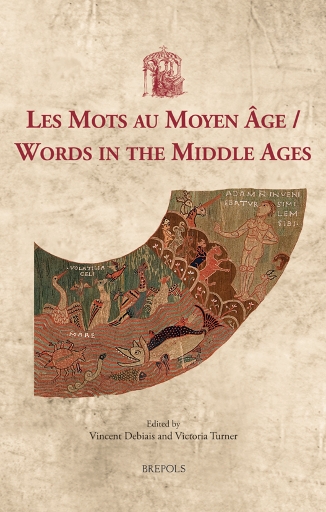
Words in the Middle Ages / Les Mots au Moyen Âge
show More to view fulltext, buy and share links for:Words in the Middle Ages / Les Mots au Moyen Âge show Less to hide fulltext, buy and share links for: Words in the Middle Ages / Les Mots au Moyen ÂgeThis collection of essays is a return to words of the Middle Ages in and of themselves, uniting philologists, historians, epigraphers, palaeographers, and art historians. It probes the intellectual, technical, and aesthetic principles that underpin their use and social function in medieval graphical practices, from epigraphy and inscriptions, to poetics, ‘mots’, and ‘paroles’. By analysing the material and symbolic properties of a particular medium, the conditions in which texts become signs, and scribal expertise, the contributors address questions that initially seem simple yet which define the very foundations of medieval written culture. What is a word? What are its components? How does it appear in a given medium? What is the relationship between word and text, word and letter, word and medium, word and reader? In a Middle Ages forever torn between economic and extravagant language, this volume traces the status of the medieval word from ontology to usage, encompassing its visual, acoustic, linguistic, and extralinguistic forms.
-
-
-
Worlds of the Silk Roads: Ancient and Modern
show More to view fulltext, buy and share links for:Worlds of the Silk Roads: Ancient and Modern show Less to hide fulltext, buy and share links for: Worlds of the Silk Roads: Ancient and ModernDefinitions of Inner Asia vary greatly. Inner Asia includes those lands that have linked the major agrarian civilisations of Eurasia, from China to India to the Mediterranean and Europe, since the late Neolithic period. In the 19th century, it became customary to refer to the trade routes between these regions as the 'Silk Roads'. But silk was just one of the goods exchanged through Inner Asia. religions, diseases, coins, cuisines, artistic fashions, political titles, all travelled the Silk Roads, as did Buddhism, Christianity, Manichaeism and Islam. Seen in this way, Inner Asia appears as the central knot in the vast tapestry of Eurasian history. To take Inner Asian history seriously is to see the underlying unity of Eurasian history. S.N.C. Lieu, From Iran to South China: The Eastward Passage of Manichaeism, L. Cansdale, Jews on the Silk Roads, C. Benjamin, An Introduction to Kushan Research, D. Christian, State Formation in the Inner Eurasian Steppes, S. Helms, Ancient Chorasmia: The Northern Edge of Central Asia from the 6th Century B.C. to the mid-4th Century A.D., H. Hendrischke, Chinese Concerns with Central Asia, C. Mackerras, Some observations on Xinjiang in the 1990s, W. Maley, The Dynamics of Regime Transition in Afghanistan, K. Nourzhanov, Traditional Kinship Structures in Contemporary Tajik Poilitics, S. Akbarzadeh, Reformism in the Bukharan Khanate, G. Lafitte, Re-orienting Mongolia, F. Patrikeef, Baron Ungern and the Eurasian Empire, R. Pitty, Russia and Eurasia in International Relations, A. Van Tongerloo, Turkestan: a Treasury of Civilisations, G. Watson, Central Asia as Hunting Ground: Sporting Images of Central Asia, T. Matthew Ciolek, 'Digital Caravanserais': Essential Online Resources for Inner Asian Studies.
-
-
-
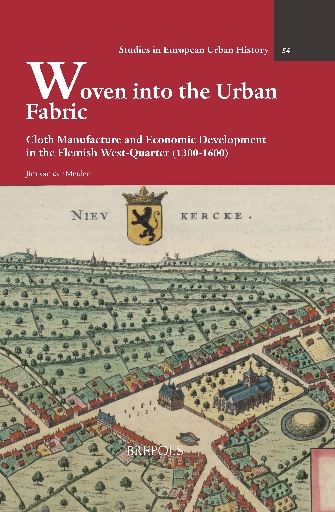
Woven into the Urban Fabric
Cloth Manufacture and Economic Development in the Flemish West-Quarter (1300-1600)
show More to view fulltext, buy and share links for:Woven into the Urban Fabric show Less to hide fulltext, buy and share links for: Woven into the Urban FabricThis regional study focuses on the socio-economic development of the so-called West-Quarter of the county of Flanders during the period 1300-1600. Through the expansion of potent textile industries in the countryside from the fourteenth century onwards, this region gradually attained distinctly ‘urban’ characteristics in terms of production scale, specialisation, product quality, and the aim for external markets. By the middle of the sixteenth century the West-Quarter had even become one of Flanders’s main production regions of woolen cloth. This book assesses how and why this economic expansion took place, why it happened at that particular moment, and why in this region. The broader aims of the research are twofold: first, to offer a contribution to the debate on Europe’s transition from a ‘feudal’ to a ‘capitalist’ or market economy by looking at the influence of specific social structures and institutional frameworks on the economic development of pre-industrial societies. Secondly, this book contributes to the debate about the divide between town and countryside in pre-industrial Europe, combining the outlooks and methods of both urban and rural historians in order to qualify this supposed dichotomy.
-
-
-
Writing Distant Travels and Linguistic Otherness in Early Modern England (c. 1550–1660)
show More to view fulltext, buy and share links for:Writing Distant Travels and Linguistic Otherness in Early Modern England (c. 1550–1660) show Less to hide fulltext, buy and share links for: Writing Distant Travels and Linguistic Otherness in Early Modern England (c. 1550–1660)As Britain’s global interests expanded from the mid-sixteenth century, geographic mobility encouraged many forms of multilingual practices in English writings. Translations, lexical borrowings, and records of exchanges between travellers and far-off lands and peoples diversely registered, communicated, engaged and politicised encounters with alterity. Meanwhile, earlier continental European translations also influenced and complicated the reception of distant otherness, entailing questions of linguistic hybridity or pluralism.
This volume explores some of the practices and strategies underpinning polyglot encounters in travel accounts produced, translated, or read in England, as well as in artistic and educational materials inflected by those travels. Drawing on linguistic, lexicographic, literary, and historical methodologies, the twelve chapters in this volume collectively look into the contexts and significances of textual contact zones. Particular attention is paid to uses of multilingualism in processes of identity construction, defining and promoting national or imperial agendas, appropriating and assimilating foreign linguistic capital, or meeting resistance and limits from linguistic and cultural otherness refusing to lend itself to a subjected or go-between status. Treating of indigenous languages, newly anglicized words, and new artistic and instructional materials, the volume makes the case for the vibrancy and influence of early modern English engagements with polyglossia and the need for multiple scales of approach to – and interdisciplinary perspectives on – the subject.
-
-
-
Writing Down the Myths
show More to view fulltext, buy and share links for:Writing Down the Myths show Less to hide fulltext, buy and share links for: Writing Down the MythsWhat are myths? Are there ‘correct’ and ‘incorrect’ versions? And where do they come from? These and many other related questions are addressed in Writing Down the Myths, a collection of critical studies of the contents of some of the most famous mythographic works from ancient, classical, medieval, and modern times, and of the methods, motivations, and ideological implications underlying these literary records of myth.
While there are many works on myth and mythology, and on the study of this genre of traditional narrative, there is little scholarship to date on the venerable activity of actually writing down the myths (mythography), attested throughout history, from the cultures of the ancient Middle East and the Mediterranean to those of the modern world. By assembling studies of the major literary traditions and texts through a variety of critical approaches, this collection poses - and seeks to answer - key questions such as these: how do the composers of mythographic texts choose their material and present them; what are the diverse reasons for preserving stories of mythological import and creating these mythographic vessels; how do the agenda and criteria of pre-modern writers still affect our popular and scholarly understanding of myth; and do mythographic texts (in which myths are, so to speak, captured by being written down) signal the rebirth, or the death, of mythology?
-
-
-
Writing History in Medieval Poland
Bishop Vincentius of Cracow and the 'Chronica Polonorum'
show More to view fulltext, buy and share links for:Writing History in Medieval Poland show Less to hide fulltext, buy and share links for: Writing History in Medieval PolandThis volume presents an in-depth analysis of the Chronica Polonorum, one of the greatest works of the twelfth-century renaissance which profoundly influenced history writing in Central Europe. The Chronica Polonorum was written by Poland’s first native historian Vincentius of Cracow. Educated in Paris and Bologna, he was the first canonically elected bishop of Cracow and a participant of the Fourth Lateran Council. The eyewitness accounts given in the Chronica Polonorum offer insights into the development of twelfth-century Poland, the ambitions of its dynasty, the country’s integration into Christendom, and the interaction between the Polish and Western elites. Vincentius’s work is considered a masterpiece in literary erudition grounded in classical training. The historical evidence it presents illuminates the socio-cultural interaction between Poland and the West during the period. Vincentius’s chronicle demonstrates the strong, enduring influence of the history, law, and traditions of ancient Rome in twelfth-century Europe.
This book deals with several subjects which have increasingly gained in prominence in English-language scholarship in recent years, such as the development of political culture, the diffusion and growth of ideas, the Christianization of the peripheral regions of Europe, and the interaction between cultural, political, and economic changes. In analysing the work of Vincentius and the Polish historiography of the Chronica Polonorum, this volume provides important insights into the development of the so-called peripheral regions of twelfth-century Europe and Poland’s engagement in the twelfth-century renaissance.
-
-
-
Writing Holiness
Genre and Reception across Medieval Hagiography
show More to view fulltext, buy and share links for:Writing Holiness show Less to hide fulltext, buy and share links for: Writing HolinessWriting Holiness contributes to exciting new critical conversations in the study of medieval hagiography in Western Christianity. Recent years have seen innovative approaches to the literatures of sanctity through emergent theoretical discourses, such as disability studies and trans theory. At the same time, traditional methodologies such as manuscript studies and reception history continue to generate new perspectives on the production, circulation, and reception of the sacred textual canon.
Through ten unique contributions that draw from both new and established theories and methodologies, this volume charts the development, movement, and reception of Christian hagiographic texts in localities ranging from the Iberian Peninsula to the Scandinavian Archipelago from the early to the late Middle Ages. Each chapter traces hagiographic development over generic, temporal, cultural, and linguistic boundaries, and considers the broader contours of the sacred imaginary that come into view as a result of such critically intersectional inquiry.
-
-
-
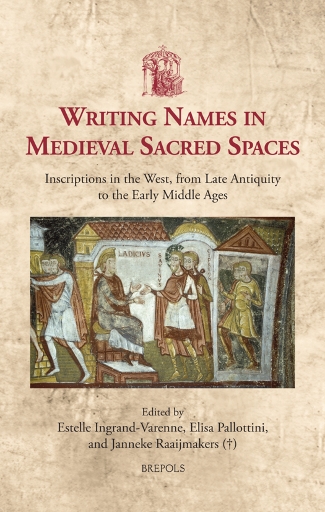
Writing Names in Medieval Sacred Spaces
Inscriptions in the West, from Late Antiquity to the Early Middle Ages
show More to view fulltext, buy and share links for:Writing Names in Medieval Sacred Spaces show Less to hide fulltext, buy and share links for: Writing Names in Medieval Sacred SpacesThis volume proposes a framework for reflection on practices of writing personal names in medieval sacred spaces, uniting historians, art historians, and specialists in written culture (both epigraphers and palaeographers). It traces the forms and functions of names that can be found within the space of early medieval churches and cemeteries, focusing mainly, but not solely, on inscriptions. By examining names written in various kinds of media, from liturgical books to graffiti and more formal inscriptions, the contributors investigate the intentions and effects of the act of writing one’s own name or having one’s name written down. Their interest resides less in the name itself than the interactions it had with its spatial, iconographic, linguistic, ritual, and cultural context, and what this indicates about medieval graphical practices. What is a name from a graphic point of view? What are the specificities of the epigraphic manifestations of names? By whom were names written, and for whom were they intended (if they were even meant to be accessed)? Addressing these and other questions, this volume shows the importance of inscriptions as historical sources and the contribution they give to the study of medieval societies at the intersection of history, anthropology, archaeology, linguistics, and semiology.
-
-
-
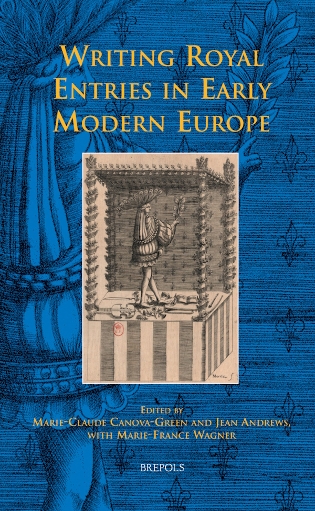
Writing Royal Entries in Early Modern Europe
show More to view fulltext, buy and share links for:Writing Royal Entries in Early Modern Europe show Less to hide fulltext, buy and share links for: Writing Royal Entries in Early Modern EuropeRoyal and ducal entries into major cities were an important aspect of political life in Renaissance and early modern Europe and the New World. The festivities provided an opportunity for the municipal authorities to show off their wealth, learning, political nous, and aspiration while allowing writers, painters, sculptors, architects, set-designers, scene-painters, dancers, musicians, choreographers, and others an unparalleled opportunity to showcase their wares. The essays in this volume cover a range of royal and ducal entries, some well documented and well known, others less so, some barely documented at all. Each essay tackles an aspect of the business of putting together an entry festivity, discusses a particular difficulty posed for the contemporary scholar by the extant documentation, or offers a consideration of issues central to the development of this type of festivity or the literature associated with it. The entries and royal progresses of members of the Habsburg, Medici, Valois, Bourbon, and Tudor dynasties are examined, as are the festivities commissioned and mounted by powerful and strategically important cities such as Berlin, Antwerp, Paris, Florence, London, and Mexico City to welcome these great personages or their marginally less great ducal representatives.
-
-
-
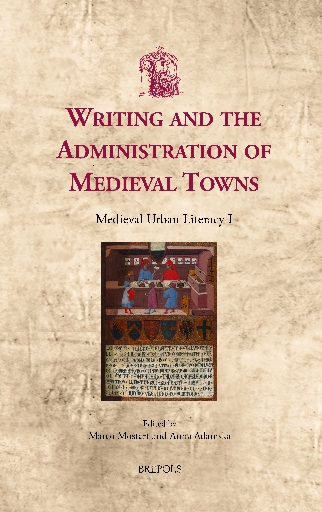
Writing and the Administration of Medieval Towns
Medieval Urban Literacy I
show More to view fulltext, buy and share links for:Writing and the Administration of Medieval Towns show Less to hide fulltext, buy and share links for: Writing and the Administration of Medieval TownsIn medieval towns, written statements of law and administration appear more prevalent than in non-urban spaces. Certain urban milieus participating in written culture, however, have been the focus of more scholarship than others. Considering the variety among town dwellers, we may assume that literacy skills differed from one social group to another. This raises several questions: Did attitudes towards the written word result from an experience of the urban educational system? On which levels, and in which registers, did different groups of people have access to writing? The need and the usefulness of written texts may not have been the same for communities and for individuals. In this volume we concentrate on the institutional written records that were most indispensable to communal order, including collections of written law, charters of liberties, and municipal registers.
-
-
-
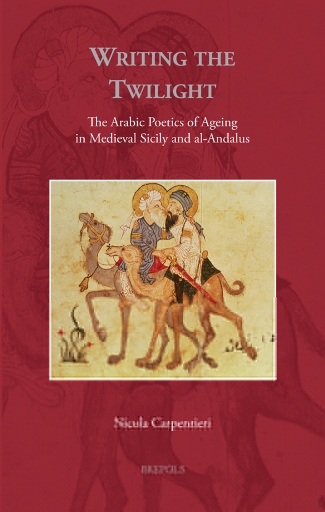
Writing the Twilight
The Arabic Poetics of Ageing in Medieval Sicily and al-Andalus
show More to view fulltext, buy and share links for:Writing the Twilight show Less to hide fulltext, buy and share links for: Writing the TwilightIn the eleventh century, as Muslim sovereignty in the Western Mediterranean was eroded by both internal divisions and external attacks, Sicily fell to the Normans. At the same time, al-Andalus fragmented into a series of small kingdoms that were then picked off by powerful conquerors. Against this backdrop, Arabic poets made use of their craft to try and explain the changes in their world. Among them were the Andalusian Abū Ishāq and the Sicilian Ibn Hamdīs, both of whom wrote vividly about their own ageing and mortality, as well as about the broader twilight of the worlds they knew.
Taking these two protagonists as its starting point, this extraordinary volume explores how Abū Ishāq and Ibn Hamdīs, despite their different locations, both made use of poetry. For them, it was a tool to confront their mortality, lament their own physical decay, and appeal to their age and experience, as well as a way of juxtaposing their concerns with the political and social dismemberment of their wider societies and the need for a restoration of world order. The result is also a broader discussion of the relationship between poetry and politics in Maghribī Islam, and a reminder of poetry’s importance as a medium to engage with the world.
-
-
-
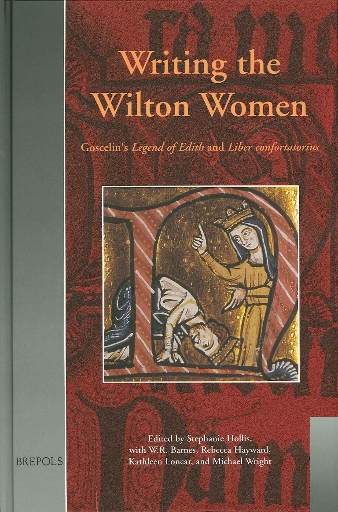
Writing the Wilton Women
Goscelin's Legend of Edith and Liber confortatorius
show More to view fulltext, buy and share links for:Writing the Wilton Women show Less to hide fulltext, buy and share links for: Writing the Wilton WomenThis collection of essays and translations brings together two closely related works by an important but little studied late eleventh-century author, Goscelin of Saint-Bertin. His Liber confortatorius (the earliest work of spiritual instruction for a female recluse known to have been written in England) is addressed to Eve. Goscelin, who may have been a chaplain at Wilton, had been Eve’s spiritual mentor since her childhood. Eve, however, left Wilton in her early twenties to become a recluse in Angers without even informing him of her plans, and in the Liber confortatorius, written in the form of an extended letter (c. 1082), Goscelin attempts to reassert and reconfigure their former close relationship.
Goscelin's account of the life and translation of St Edith, who was a member of the Wilton community until her death (in c. 986) at the age of twenty-three, was commissioned by the Wilton nuns and based on their oral report. Completed in c. 1080, the Legend gives a portrait of Edith and her mother Abbess Wulfthryth, and an account of the community’s posthumous relationship with its saint up until the time that Goscelin began work on it. It is (with the exception of Goscelin’s Life of Wulfhild of Barking) our only near contemporary narrative account of a late Anglo-Saxon women’s community.
The essays in this collection present a closely integrated account of some of the most central and striking aspects of the two texts. The essays and accompanying translations are the result of a collaborative research project undertaken at the University of Auckland.
-
-
-
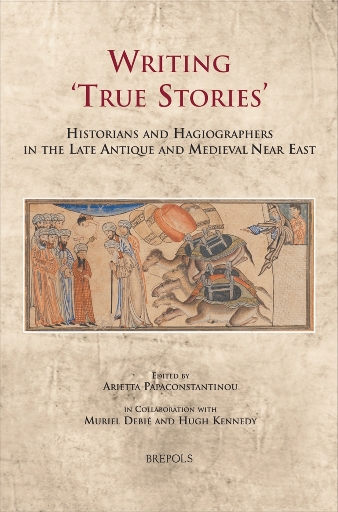
Writing ‘True Stories’
Historians and Hagiographers in the Late Antique and Medieval Near East
show More to view fulltext, buy and share links for:Writing ‘True Stories’ show Less to hide fulltext, buy and share links for: Writing ‘True Stories’The papers in this volume examine the interaction between history and hagiography in the late antique and medieval Middle East, exploring the various ways in which the two genres were used and combined to analyse, interpret, and re-create the past. The contributors focus on the circulation of motifs between the two forms of writing and the modifications and adaptations of the initial story that such reuse entailed. Beyond this purely literary question, the retold stories are shown to have been at the centre of a number of cultural, political, and religious strategies, as they were appropriated by different groups, not least by the nascent Muslim community. Writing ‘True Stories’ also foregrounds the importance of some Christian hagiographical motifs in Muslim historiography, where they were creatively adapted and subverted to define early Islamic ideals of piety and charisma.
-
-
-
Writings on the Spiritual Life
A Selection of Works of Hugh, Adam, Achard, Richard, Walter, and Godfrey of St Victor
show More to view fulltext, buy and share links for:Writings on the Spiritual Life show Less to hide fulltext, buy and share links for: Writings on the Spiritual LifeThe Canons following the Rule of St Augustine at St Victor in Paris were some of the most influential religious writers of the Middle Ages. They combined exegesis and spiritual teaching in a theology that was deeply rooted in tradition but also attuned to current developments in the schools of Paris. This selection of their writings on the spiritual life is divided into three sections. The first presents three works by Achard and Richard which treat the development of Christian life from the beginnings of conversion to the perfection of love and contemplation. Prayer, meditation and the gifts of the Holy Spirit are the subjects of the works by Hugh and Richard included in the second section. The final section presents poetical, exegetical and homiletic works honoring Mary by Hugh, Adam, Richard and Godfrey. This rich and representative sampling of Victorine works is a clear window into a world that still has much to offer modern readers interested in spirituality, medieval or modern.
The editor of this volume is Christopher P. Evans (PhD, St Louis University; Department of Theology, University of St. Thomas, Houston, TX), the editor of Hildegard of Bingen’s Explanatio symboli sancti Athanasii (2007), Vita sancti Disibodi, Vita sancti Ruperti and the Triginta octo questionum solutiones (forthcoming; Corpus Christianorum, Continuatio Mediaevalis) and Radulphus Ardens: The Questions on the Sacraments (2010).
-
-
-
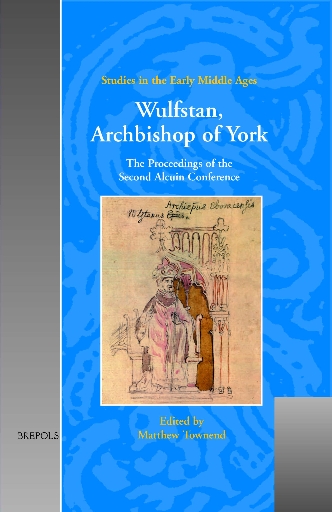
Wulfstan, Archbishop of York
The Proceedings of the Second Alcuin Conference
show More to view fulltext, buy and share links for:Wulfstan, Archbishop of York show Less to hide fulltext, buy and share links for: Wulfstan, Archbishop of YorkMost famous for his harrowing ‘Sermon of the Wolf to the English’, Archbishop Wulfstan II of York (1002-23) has emerged in recent decades as one of the most important and influential figures in the late Anglo-Saxon church and state. This volume, which arises from a conference held in 2002 to mark the millennial anniversary of Wulfstan’s appointment as archbishop, is the first collection of essays to be devoted to this crucial figure. Its twenty contributors address the whole range of Wulfstan’s activities and writings, and supply not only an up-to-date survey of Wulfstan studies but also many new directions, discoveries, and insights. The studies within this volume variously explore Wulfstan’s preaching and law-making; his position in the late Anglo-Saxon church; the places and contexts in which he lived and worked; and, more generally, his learning, concerns, and ideas. The contributors, drawn from a variety of disciplines, bring together literary, historical, and art historical approaches to the study of Wulfstan, and a recurrent focus is on the extant manuscripts associated with him. Altogether, therefore, this volume provides a thorough and wide-ranging exploration of the life, works, and contexts of one of the most important of all Anglo-Saxons.
-
-
-
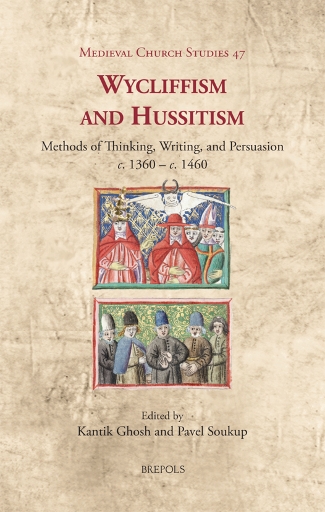
Wycliffism and Hussitism
Methods of Thinking, Writing, and Persuasion c. 1360 – c. 1460
show More to view fulltext, buy and share links for:Wycliffism and Hussitism show Less to hide fulltext, buy and share links for: Wycliffism and HussitismJohn Wyclif (d. 1384), famous Oxford philosopher-theologian and controversialist, was posthumously condemned as a heretic at the Council of Constance in 1415. Wyclif’s influence was pan-European and had a particular impact on Prague, where Jan Hus, from Charles University, was his avowed disciple and the leader of a dissident reformist movement. Hus, condemned to the stake at Constance, gathered around him a prolific circle of disciples who changed the landscape of late medieval religion and literature in Bohemia, just as Wyclif’s own followers had done in England.
Both thinkers, and the movements associated with them, played a crucial role in the transformation of later medieval European thought, in particular through a radically enlarged role of textual production in the vernaculars (especially Middle English and Old Czech), as well as in Latin, in the philosophical, theological, and ecclesiological realms.
This interdisciplinary volume of essays brings together cutting-edge research from scholars working in these and contiguous fields and asks fundamental questions about the methods that informed Wycliffite and Hussite writings and those by their interlocutors and opponents. Viewing these debates through a methodological lens enables a reassessment of the impact that they had, and the responses they elicited, across a range of European cultures, from England in the west via France and Austria to Bohemia in the east.
-
-
-

Wycliffite Controversies
show More to view fulltext, buy and share links for:Wycliffite Controversies show Less to hide fulltext, buy and share links for: Wycliffite ControversiesThe philosophical and theological ideas of John Wyclif, their dissemination among clerical and lay audiences, and the movement of religious dissent associated with his name all provoked sharp controversies in late medieval England. This volume brings together the very latest scholarship on Wyclif and Wycliffism, with its contributors exploring in interdisciplinary fashion the historical, literary, and theological resonances of the Wycliffite controversies. Far from adhering to the traditional binary divide between ‘orthodoxy’ and ‘heresy’ as a tool for explaining the religious turmoil of the late fourteenth, fifteenth, and early sixteenth centuries, essays here explore the construction and rhetorical use of those terms, collectively producing a more nuanced account of the religious history of pre-Reformation England. Topics include the use of religious lyrics and tables of lessons as indirect rebuttals of Wycliffite claims; the social networks through which dissenters transmitted their ideas; dissenting and mainstream readings of Scripture; the ‘survival’ of Wycliffism in the run-up to Henry VIII’s reformation; and the fate of Wyclif and Wycliffism in later historiography. Leading contributors include Anne Hudson, Alastair Minnis, and Peter Marshall.
-
-
-
Xanthippe et Polyxène
Un roman chrétien
show More to view fulltext, buy and share links for:Xanthippe et Polyxène show Less to hide fulltext, buy and share links for: Xanthippe et PolyxèneCe petit roman chrétien, composé en grec vraisemblablement autour du v e siècle et manifestement influencé par les Actes apocryphes des apôtres, se compose de deux parties, chacune centrée sur une femme. L’héroïne du premier récit, Xanthippe, épouse d’un notable, est tournée vers l’ascèse et, bien que païenne, aspire à connaître le Dieu de Paul. Or, il se trouve que l’apôtre se rend en Espagne dans sa ville. Surmontant plusieurs épreuves avec détermination et faisant preuve d’un remarquable discernement spirituel, la chaste Xanthippe est baptisée par Paul et contribue à la conversion de son mari. Polyxène, sa jeune sœur, est l’héroïne du second récit, fort différent, qui se présente comme un véritable roman d’aventures et de voyages. Victime d’un enlèvement et emmenée en Grèce, elle voit sa virginité maintes fois menacée. Mais elle bénéficie de plusieurs aides efficaces, dont celles des apôtres Pierre, Philippe et André. Elle s’en retourne saine et sauve dans sa ville d’Espagne pour rester désormais attachée à l’apôtre Paul. L’ensemble de ce roman présente la particularité de fournir l’unique récit conservé des faits et gestes de Paul en Espagne.
-
-
-
The Yearbook of Langland Studies
show More to view fulltext, buy and share links for:The Yearbook of Langland Studies show Less to hide fulltext, buy and share links for: The Yearbook of Langland StudiesThe Yearbook of Langland Studies is the sole journal devoted to Piers Plowman studies. Since 1987, YLS has significantly shaped the expanding critical attention to the poem and its contexts. Each volume - including essays, debate, reviews, and annual annotated bibliography - offers access to the most significant and up-to-date scholarship on the poem and its literary, historical, codicological, and critical contexts.
More information about this journal on Brepols.net
-
-
-
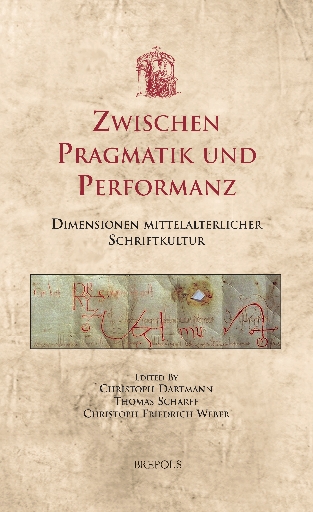
Zwischen Pragmatik und Performanz
Dimensionen mittelalterlicher Schriftkultur
show More to view fulltext, buy and share links for:Zwischen Pragmatik und Performanz show Less to hide fulltext, buy and share links for: Zwischen Pragmatik und PerformanzResearch on the practices and impacts of literacy has revolutionized the study of medieval history and culture. After initially having focused on investigating the modernising aspects of the development of literacy during the Middle Ages, the discussion now involves a large variety of topics, such as the performance of writing and reading, the use of the written word in political ritual and, on a general level, the ‘otherness’ of medieval communication. The volume presents essays dealing with a wide range of social and political uses of the written word during the Middle Ages, from the Carolingian era to late medieval Italy, Switzerland, Germany and Burgundy. It presents a panorama of the current state of the research and also offers new insights into the current conceptual debates about the history of communication in premodern Europe.
-
-
-
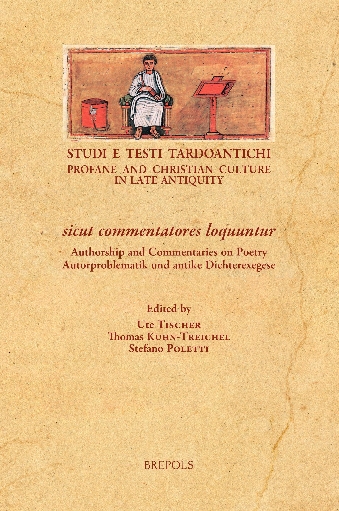
sicut commentatores loquuntur
Authorship and Commentaries on Poetry / Autorproblematik und antike Dichterexegese
show More to view fulltext, buy and share links for:sicut commentatores loquuntur show Less to hide fulltext, buy and share links for: sicut commentatores loquunturAncient commentaries on poetry - due to their heteronomous nature, their miscellaneous character, and the fact that most of them are transmitted in abridged and anonymous form - are usually not considered ‘authorial’ texts in the same way as poems or literary prose are. On the other hand, as didactic texts, they rely on authority to convey their interpretation, and they also often seem to have been perceived as products of authorial activity, as paratexts, references and pseudepigraphic attributions demonstrate.
The aim of this volume is to explore this tension and to examine commentaries and scholia on poetry in terms of authorship and ‘authoriality’. The contributions use several Latin and Greek corpora as case studies to shed light on how these texts were read, how they display authorial activity themselves, and how they fulfil their function as didactic works. They provide reflections on the relationship of author, authorship, and authority in ‘authorless’ traditions, explore how authorial figures and authorial viewpoints emerge in an implicit manner in spite of the stratified nature of commentaries, investigate the authorial roles adopted by commentators, compilers and scribes, and elucidate how commentators came to be perceived as authors in other exegetic traditions.
-
-
-
ut pictura poeta
Author Images and the Reading of Ancient Literature / Autorbilder und die Lektüre antiker Literatur
show More to view fulltext, buy and share links for:ut pictura poeta show Less to hide fulltext, buy and share links for: ut pictura poetaThe leitmotif of this volume is the concept of “author images”, which is used in modern literary studies to describe processes of production and reading of literary works and is here applied for the first time to the study of ancient works. As a means of analysing ancient literature, it captures the aspect of personification, which is characteristic of ancient author concepts, and at the same time points to the fact that there is a difference between “image” and “author” and that it is only an image and not the author himself that can be seen and grasped by readers.
This makes the “author image” particularly suitable for examining the intersections of material, rhetorical and mental representations of literary authorship that form the subject of this volume. Using selected examples from Latin and Greek literature, the contributors explore the fields of cultural experience that nourish authorial images. They discuss the manifold possibilities of visualising and representing a person’s quality of being an author in general or being an author of specific works, be it physically through artworks or pictures, metaphorically through evoked authorial figures, through thematised representations of authors in a text, or through the combination of authorial images and texts.
These issues are addressed in four overlapping sections, each focusing on different areas of the metaphor’s application, namely material images in the form of artworks, knowledge about persons, textual images as authorial strategies and images in reception.
-
-
-
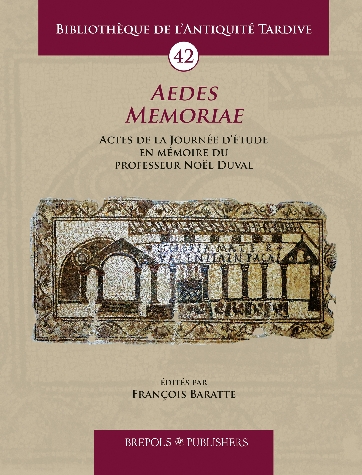
« Aedes Memoriae »
Actes de la Journée d’Études en mémoire du professeur Noël Duval
show More to view fulltext, buy and share links for:« Aedes Memoriae » show Less to hide fulltext, buy and share links for: « Aedes Memoriae »Le professeur Noël Duval, à la forte personnalité, a marqué le renouveau des études sur l’antiquité tardive. Se consacrant plus particulièrement à l’Afrique romaine et byzantine, il en a étudié l’histoire tardive et l’archéologie, en particulier celle des églises paléochrétiennes. Mais ses intérêts se sont portés aussi sur la Gaule à la fin de l’antiquité, et, plus largement, à l’ensemble du bassin méditerranéen. Sa disparition, en 2018, a été incontestablement une grande perte. Ses amis et ses élèves ont tenu à honorer sa mémoire en rassemblant un recueil de contributions scientifiques sur des sujets sur lesquels il avait travaillé, mais aussi en évoquant sa mémoire et sa personnalité.
-
-
-
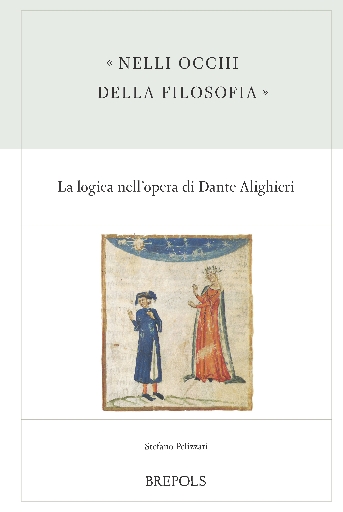
«Nelli occhi della filosofia». La logica nell’opera di Dante Alighieri
show More to view fulltext, buy and share links for:«Nelli occhi della filosofia». La logica nell’opera di Dante Alighieri show Less to hide fulltext, buy and share links for: «Nelli occhi della filosofia». La logica nell’opera di Dante AlighieriCodificata a partire da una sezione specifica del corpus aristotelico, la logica rappresentava nel Medioevo latino quell’"arte delle arti" (ars artium) che studiava le regole del ragionamento corretto e le era riconosciuta una universalità di tipo strumentale. Come notato sin dai primi biografi e commentatori, Dante dimostra in svariate occasioni una maestria e una padronanza della materia del tutto degne, per dirla col Boccaccio, di un «maraviglioso loïco». Giustamente celebri sono i versi di Inferno XXVII in cui «un d’i neri cherubini», con un raffinato ragionamento, strappa l’anima di Guido da Montefeltro all’impotente San Francesco («forse / tu non pensavi ch’io loïco fossi!», v. 123); ma è soprattutto nel Convivio, nella Monarchia e nella controversa Questio de aqua et terra che l’Alighieri sfoggia una competenza difficilmente riducibile alla consultazione occasionale di qualche ‘manuale’. Questo studio analizza sistematicamente i passaggi dell’opera dantesca riconducibili a questo specifico ambito disciplinare; e offre una panoramica sugli ambienti culturali in cui il Poeta avrebbe verosimilmente potuto formarsi (Firenze, Bologna, la Toscana occidentale, la marca Trevigiana). Da un lato, quindi, si inserisce nel fortunato filone di studi che si è occupato di valutare la conoscenza che Dante poté avere delle dottrine di Aristotele e dei suoi interpreti. Dall’altro, tenta di ricostruire i tempi, i luoghi e i modi in cui, «peregrino, quasi mendicando», poté acquisire tale competenza specialistica. In tal modo, non viene solo illuminato un lato inesplorato di questo eccezionale «amatore di sapienza», ma viene anche offerto uno scorcio privilegiato sullo stato delle conoscenze filosofiche in Italia fra XIII e XIV secolo.
-
-
-
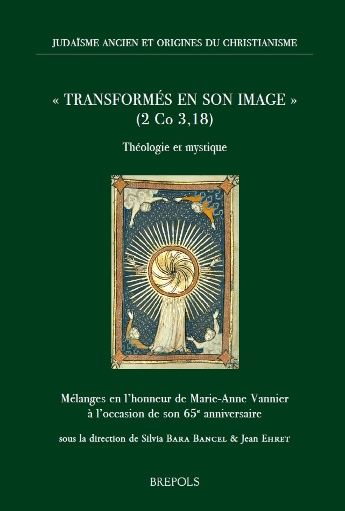
« Transformés en son image » (2 Co 3,18) – Théologie et mystique
Mélanges en l’honneur de Marie-Anne Vannier à l’occasion de son 65e anniversaire
show More to view fulltext, buy and share links for:« Transformés en son image » (2 Co 3,18) – Théologie et mystique show Less to hide fulltext, buy and share links for: « Transformés en son image » (2 Co 3,18) – Théologie et mystiqueCet ouvrage, qui se réalise en l’honneur de la professeure Marie-Anne Vannier, dans une perspective interdisciplinaire, réunit les experts sur les grands thèmes qu’elle a parcourus : les Pères de l’Église, les mystiques rhénans et Nicolas de Cues, les études juives et orthodoxes, l’histoire de la mystique et la réflexion systématique sur la relation entre théologie et mystique en centrant les propos autour de la conformation au Christ. L’ouvrage prend en compte des recherches récentes et se déploie comme une étude originale de théologie mystique, structuré comme un parcours historique qui s’étend des origines judéo-chrétiennes à nos jours, et se termine par des réflexions systématiques sur la relation entre théologie et mystique.
-
-
-
À la recherche de la continuité iranienne : de la tradition zoroastrienne à la mystique islamique
Recueil de textes autour de l’œuvre de Marijan Molé (1924-1963)
show More to view fulltext, buy and share links for:À la recherche de la continuité iranienne : de la tradition zoroastrienne à la mystique islamique show Less to hide fulltext, buy and share links for: À la recherche de la continuité iranienne : de la tradition zoroastrienne à la mystique islamiqueLes travaux de l’iranisant slovéno-polonais Marijan Molé (1924-1963) ont exercé sur les sciences religieuses une profonde influence qui se laisse observer jusqu’à nos jours. En à peine quinze ans (1948-1963), il a su donner une impulsion sans précédent aux études iraniennes, grâce à l’étude minutieuse des corpus allant de l’Avesta et de la littérature moyen-perse zoroastrienne aux traités de mystique islamique, en passant par les épopées persanes et les gestes mythiques. Trop tôt interrompu, le vaste projet qu’il avait mis en œuvre dès ses années d’étude à Cracovie et qu’il poursuivit à Paris et à Téhéran avait pour axe principal la mise au jour d’un système unitaire qui sous-tendrait l’évolution d’une doctrine religieuse sur la longue durée, une « continuité iranienne ».
La découverte récente de son Nachlass (IRHT et BULAC, Paris) nous fournit l’occasion de faire un état des lieux de son héritage et de tenter de mettre en lumière l’originalité de sa démarche et son apport à l’histoire des idées et au débat intellectuel sur les religions de l’Iran, en dégageant à la fois les acquis et les impasses, les innovations et les prolongements.
Le présent volume rassemble les contributions sur le zoroastrisme et la mystique islamique, présentées à la journée d’étude internationale intitulée « Entre le mazdéisme et l’islam », dédiée à l’œuvre de Marijan Molé, qui s’est tenue le 24 juin 2016 à Paris.
-
-
-
À la recherche des villes saintes
Actes du colloque franco-néerlandais "Les villes saintes", Collège de France, 10 et 11 mai 2001
show More to view fulltext, buy and share links for:À la recherche des villes saintes show Less to hide fulltext, buy and share links for: À la recherche des villes saintesEn un temps où la sainteté traditionnellement attribuée à certaines villes continue plus que jamais d’être alléguée par les guerriers de tout bord, les sciences des religions ne peuvent éluder les questions qu’elle soulève. Le colloque d’où ce livre est issu se proposait de confronter les analyses de situations particulières, menées selon les méthodes de l’histoire, de la philologie, de l’ethnologie et de l’anthropologie, en élargissant l’examen à d’autres cultures que celles des religions dites du Livre, sans négliger celles-ci. Les auteurs des études réunies ici sont à la recherche de concepts opératoires, à distance du discours de la dévotion. Ils sont aussi à la recherche des formes infiniment variées de la sanctification des villes à des époques différentes, sous le regard, proche ou lointain, des habitants et des exilés, sous l’emprise, conquérante ou déçue, des pouvoirs qui s’érigent sur la sacralité des lieux et des communautés qui préservent ou s’inventent des identités en pérennisant des héritages ou en se les appropriant. Ils offrent des exemples bons à penser au lecteur qui est à la recherche, au moyen de la comparaison, tant des traits communs que des divergences. Un tel voyageur passe sept fois par Jérusalem et perçoit les métamorphoses de sa sainteté, telle qu’elle est codifiée à l’ère hellénistique (A. van der Kooij) et institutionnalisée en diaspora dans le monde gréco-romain (J. Tromp) ; telle qu’elle est menacée de mort au moment de la ruine du temple (S. Mimouni, M.-J. Pierre) ; rêvée et remodelée, à la fois évanescente et tangible, dans l’exil médiéval (J.-C. Attias) ; confortée pour les chrétiens du XVIe siècle par ce qui leur paraît l’humiliation de la ville, ses blessures devenant les stigmates de sa gloire (M.-C. Gomez-Géraud) ; jumelée avec La Mecque par la réflexion cosmogonique et eschatologique des mystiques musulmans (P. Lory). Le cas de La Mecque et de Médine aide à construire une typologie moderne (G. A. Wiegers) et à penser le rapport entre ville sainte et territoire sacré (H. Benkheira). La vénération pour Axoum dans l’Éthiopie chrétienne fait converger motivations religieuses et politiques (G. Lusini). À Rome, l’hagiographie martyriale part à la conquête du bastion polythéiste (P. Boulhol). D’autres rivalités se dessinent dans la mythologie des peuples du Mexique ancien qui ont tiré leur prestige de Cholula (M. Graulich). L’Inde, c’est à la fois le tout autre et le même : la sainteté des villes y est placée sous le signe de la fluidité (M.-L. Reiniche). Partout se vérifie et s’annihile le lamento paradoxal de Baudelaire : « La forme d’une ville change plus vite, hélas ! que le cœur d’un mortel ».
Directeur d’études à la Section des sciences religieuses de l’École pratique des hautes études où il est titulaire de la chaire « Patristique et histoire des dogmes », Alain Le Boulluec consacre ses recherches aux doctrines des Pères grecs des premiers siècles et à leur exégèse de la Septante. Auteur d'un ouvrage en deux volumes sur la notion d'hérésie (Paris, 1985), il publie les oeuvres de Clément d'Alexandrie dans la collection « Sources chrétiennes » (Stromates V et VII, en 1981 et 1997) et collabore à l'entreprise « La Bible d'Alexandrie » (t. 2, Exode, en 1989, avec P. Sandevoir), tout en étudiant la littérature apocryphe chrétienne (écrits pseudo-clémentins).
-
-
-
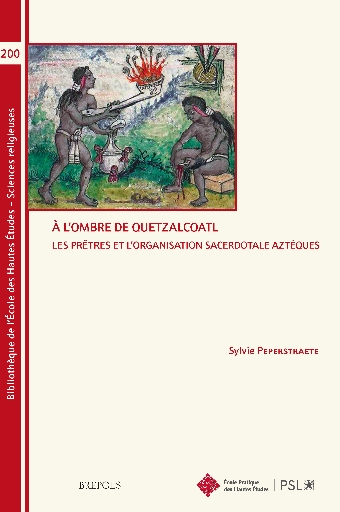
À l’ombre de Quetzalcoatl. Les prêtres et l’organisation sacerdotale aztèques
show More to view fulltext, buy and share links for:À l’ombre de Quetzalcoatl. Les prêtres et l’organisation sacerdotale aztèques show Less to hide fulltext, buy and share links for: À l’ombre de Quetzalcoatl. Les prêtres et l’organisation sacerdotale aztèquesLa prêtrise aztèque constitue une thématique de recherche à la fois inédite et d’une grande richesse. Quelles étaient les caractéristiques de la fonction sacerdotale au Mexique ancien ? Qui étaient les hommes et les femmes qui, journellement comme en des circonstances plus exceptionnelles, prenaient soin des divinités et veillaient au bon accomplissement des rites ? Quels étaient les modèles mythiques des prêtres mésoaméricains ? Quels étaient leurs rapports avec Quetzalcoatl et Tlaloc, les deux divinités dont ils étaient présentés comme proches ?
C’est un regard neuf qui, à travers ces questions, se porte ici sur les religions mésoaméricaines, étudiées dans leurs aspects pratiques et quotidiens et non pas uniquement au moyen de concepts abstraits ou par le biais des rites les plus spectaculaires – à l’instar de ce qui fut l’une des seules images véhiculées en Europe depuis le xvi e siècle, celle du prêtre arrachant le cœur encore palpitant d’une victime sacrificielle.
Cet ouvrage richement illustré se situe à la croisée de l’iconologie, de l’histoire et de l’anthropologie des religions, tout en intégrant des éléments de philologie et d’archéologie. Il propose une réflexion résolument contemporaine sur la méthodologie à mettre en œuvre pour aborder la documentation relative aux cultures mésoaméricaines préhispaniques et mieux comprendre le processus d’élaboration des sources du xvi e siècle.
-
-
-
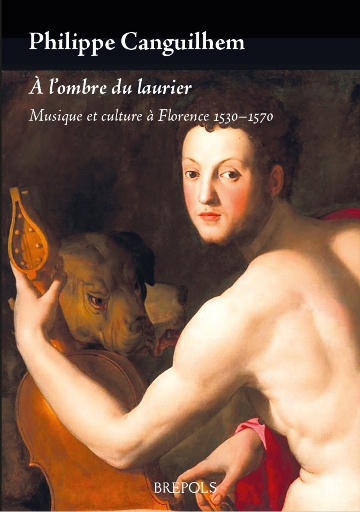
À l’ombre du laurier
Musique et culture à Florence 1530-1570
show More to view fulltext, buy and share links for:À l’ombre du laurier show Less to hide fulltext, buy and share links for: À l’ombre du laurierFruit de plus de quinze années de recherches dans les bibliothèques et archives de Florence, ce livre souhaite mettre en évidence le rôle de la musique dans le dispositif culturel mis en place par les premiers ducs de Florence, Alessandro et Cosimo 1, depuis la chute de la dernière République jusqu’à l’obtention par Cosimo du titre de grand-duc de Toscane par le pape Pie V. Ces quatre décennies, marquées par des bouleversements politiques, sociaux et culturels ont été scrutées avec la plus grande attention dans les domaines de l’histoire de l’art, de l’histoire politique, économique ou littéraire, mais la place de la musique dans cette société en mouvement n’avait jamais été évaluée en profondeur. Observer la vie musicale florentine de cette période permet pourtant de révéler les mutations profondes des structures de pouvoir, des réseaux de sociabilité et des référents culturels.
Suivant un plan chronologique, le livre s’appuie sur certains personnages-clés qui traversent toute la période, les peintres Bronzino et Vasari, les écrivains et académiciens Benedetto Varchi, Antonfrancesco Grazzini ou Giovan Battista Strozzi, dont les collaborations et les amitiés avec les musiciens florentins ont laissé de nombreuses traces. En suivant les activités de cette communauté, cette enquête relate la transformation progressive des canti carnascialeschi en mascherate de cour, les débats musicaux au sein de l’Accademia Fiorentina, le dynamisme de la pratique du madrigal polyphonique dans les milieux amateurs, sans oublier les mécanismes du mécénat musical et la construction d’une musique de cour au service du nouveau duché des Médicis.
-
-
-
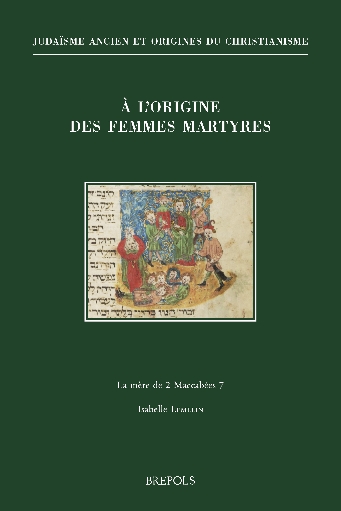
À l’origine des femmes martyres
La mère de 2 Maccabées 7
show More to view fulltext, buy and share links for:À l’origine des femmes martyres show Less to hide fulltext, buy and share links for: À l’origine des femmes martyresLe présent ouvrage porte sur la première martyre de la littérature monothéiste, c’est-à-dire la mère anonyme du 7ème chapitre du 2ème livre des Maccabées (2 M). L’exégèse qui y est faite démontre, grâce à une critique structurelle et des analyses narratologique, comparative et philologique, que ce personnage est central, autant dans le texte deutérocanonique que pour la martyrologie, bien qu’il soit généralement éclipsé dans la littérature savante. Or, la particulière virilité des femmes martyres d’hier et d’aujourd’hui s’y inscrit en primeur au verset 7, 21 et la nouvelle traduction proposée par l'auteure bouscule les idées reçues. En effet, les habituels « sentiments féminins » deviennent « une pensée féminine » et le « mâle courage » fait place à « une colère virile ou humaine », selon que l’épithète est comparée au féminin dans le parallélisme croisé du verset ou mise en parallèle avec les colères inhumaines de certains personnages masculins du livre, dont le roi Antiochos IV Épiphane et les guerriers judéens. D’ailleurs, les analyses comparées des éléments identitaires de la martyre avec ceux du roi séleucide permettent de constater que son trouble dans le genre s’observe sur divers plans et contribue indéniablement à son unicité. C’est sans compter que les discours de la mère représentent la plus importante innovation du livre, et ce, tant sur le plan anthropologique que théologique. En somme, l’ouvrage montre que la mère de 2 M 7 est belle et bien « éminemment admirable et digne de bonne mémoire » (2 M 7, 21).
-
-
-
Ælius Aristide et Xénophon
Regards d’un orateur gréco-romain sur un classique de l’hellénisme
show More to view fulltext, buy and share links for:Ælius Aristide et Xénophon show Less to hide fulltext, buy and share links for: Ælius Aristide et XénophonSeveral ancient literary sources show that Xenophon was regarded during the Imperial period as a preeminent model. This study looks at how Xenophon was received in the speeches of Ælius Aristides – an angle that has not been explored until now. The speeches examined include the Platonic speeches (or. 2-4), the speech Concerning a remark in passing (or. 28), the declamation On behalf of making peace with the Athenians (or. 8), the group of the five Leuctran orations (or. 11-15), the evidence for the lost declamation Callixenus, the Panathenaicus (or. 1) and the speech To Rome (or. 26). Greek history plays a key role in this inquiry, especially since Aristides showed a particular interest in the aftermath of the Battle of Leuctra. The historical allusions to Xenophon’s Hellenica reveal Aristides’ erudition and his attention to the speeches within that work. Studying how Aristides draws on Xenophon can help deepen our understanding of his orations and open up new directions for research on Xenophon’s reception.
-
-
-
Ælius Aristide écrivain
Textes réunis et édités par Laurent Pernot, Giancarlo Abbamonte, Mario Lamagna, avec l'assistance de Maria Consiglia Alvino
show More to view fulltext, buy and share links for:Ælius Aristide écrivain show Less to hide fulltext, buy and share links for: Ælius Aristide écrivainThis book aims at explaining the reasons why the rhetor Ælius Aristides (117-after 180 AD) became a classic in ancient Greek literature. Twenty international specialists have been invited to write a collection of essays, which offers a general overview of Aristides’ activity as a writer and the reception of his work in the historical periods that followed. Contributors analyse Aristides’ speeches one by one and discuss the main interpretative issues, particularly in literary and political matters. They point out emergent fields of inquiry, such as Aristides’ relationship to contemporary writers or the transmission and translation of his speeches during the Renaissance. This volume, which has no equivalent at present, offers an assessment of recent advances in research and outlines new perspectives for the future.
-
-
-
Échanges, communications et réseaux dans le Haut Moyen Âge
Études et textes offerts à Stéphane Lebecq
show More to view fulltext, buy and share links for:Échanges, communications et réseaux dans le Haut Moyen Âge show Less to hide fulltext, buy and share links for: Échanges, communications et réseaux dans le Haut Moyen ÂgeStéphane Lebecq a pris sa retraite en juin 2009. Pour lui rendre hommage, ses amis et collègues ont voulu faire écho à ses travaux sur le haut Moyen Âge en s’inspirant de ses domaines de recherche. Si la majorité des seize contributions de ce volume se situe dans l’Europe du Nord-Ouest, aire géographique d’élection de son travail scientifique, plusieurs étendent ses questionnements à des parties méridionales de l’Occident, voire à l’Orient byzantin. On peut répartir l’ensemble en deux grands volets qui rejoignent les thèmes de prédilection de Stéphane Lebecq. Le premier est la mer, envisagée comme un milieu de vie ou comme le cadre d’échanges à travers la navigation, singulièrement la navigation commerciale. Le second s’attache aux personnes qui animent ces échanges et entretiennent ainsi des réseaux fondant leur pouvoir : puissants de tous ordres, ambassadeurs, missionnaires.
-
-
-
Écrire le voyage au temps des ducs de Bourgogne
Actes du colloque international organisé à l’Université Littoral Côte d’Opale, Dunkerque
show More to view fulltext, buy and share links for:Écrire le voyage au temps des ducs de Bourgogne show Less to hide fulltext, buy and share links for: Écrire le voyage au temps des ducs de BourgogneIssu des rencontres internationales qui se sont tenues à l’Université Littoral - Côte d’Opale (Dunkerque) les 19 et 20 octobre 2017, le présent ouvrage vise à mieux appréhender le rôle prépondérant joué par les États bourguignons dans l’essor de l’écriture du voyage. Il s’attache en particulier au genre du récit de voyage qui, dans les villes des Pays-Bas comme à la cour des ducs, gagna bien vite la faveur des élites bourguignonnes : pèlerins, diplomates, soldats ou marchands, les voyageurs écrivains apportent pour beaucoup une contribution originale à ce mode spécifique de narration. Ce recueil d’études a par ailleurs pour objectif de mettre en lumière les liens subtils que ce genre littéraire entretient tout à la fois avec la littérature romanesque et la production historiographique qui s’épanouissent alors en terre bourguignonne et réservent une place non négligeable à l’écriture du voyage, imaginaire ou réel.
-
-
-
Écrire pour la cour ou la lecture mise en scène, xvi e-xviii e siècles
show More to view fulltext, buy and share links for:Écrire pour la cour ou la lecture mise en scène, xvi e-xviii e siècles show Less to hide fulltext, buy and share links for: Écrire pour la cour ou la lecture mise en scène, xvi e-xviii e sièclesCet ouvrage met en lumière une série de cas dont le contexte est ancré dans les cours de l’époque moderne et qui ont trait aux pratiques de publications et aux usages politiques et sociaux de l’écrit. Il constitue une approche originale de la question de la lecture dans les espaces curiaux en s’attachant à observer les pratiques d’acteurs et d’actrices qui désignent, représentent ou constitue la cour et les courtisans comme lectorat. Ce faisant, ceux qui écrivent et publient se forgent une réputation liée à l’univers curial autant qu’ils participent à modeler cet espace aux contours flou et qui se caractérise avant tout par son caractère de lieu de pouvoir.
Comment s’articulent et se modèlent respectivement les pratiques littéraires et la cour dans sa dimension symbolique comme dans son fonctionnement institutionnel à l’époque moderne ? C'est à cette question que se sont intéressées les contributions présentes dans cet ouvrage qui fait dialoguer littéraires, historiens et historiennes.
-
-
-
Écrit et pouvoir dans les chancelleries médiévales: espace français, espace anglais
show More to view fulltext, buy and share links for:Écrit et pouvoir dans les chancelleries médiévales: espace français, espace anglais show Less to hide fulltext, buy and share links for: Écrit et pouvoir dans les chancelleries médiévales: espace français, espace anglaisThis volume contains papers presented at a conference, "Théorie et pratique de l'écrit dans les chancelleries royales et princières : l'espace français et anglais", held at the Université du Québec à Montreal in September 1995. Focusing specifically on the study of French and English societies in the late Middle Ages, these papers demonstrate the essential role of the written document in the growth of state power and the development of an effective bureaucracy at all levels of government, from kingdoms to principalities, towns and villages. Emphasis is given to analysis of the strategies by which medieval chanceries attempted to control the quality and authenticity of written documents. The first was the production of written records, the conventions and rules governing their form and content, and authorities who defined and enforced these standards. The second theme was the importance of written documents in administration and justice, and the resulting need to devise means of certification, circulation and conservation. Finally, a third research objective concerned detection and repression of frauds. From Scotland to Provence, by way of Brittany, the contributors cast light on the connection between writing and state formation at the close of the Middle Ages.
-
-
-
Écrits valaisans et tibétains
show More to view fulltext, buy and share links for:Écrits valaisans et tibétains show Less to hide fulltext, buy and share links for: Écrits valaisans et tibétainsChanoine régulier du Grand Saint-Bernard, missionnaire aux marches tibétaines, Maurice Tornay devait y trouver le martyre en 1949. L'intérêt intrinsèque de son oeuvre écrite, principalement constituée par une correspondance d'une constante authenticité de ton, dépasse l'occasion de sa prochaine béatification. Ses Lettres en effet ne sont pas sans évoquer par leur thématique spirituelle la correspondance d'une Thérèse de Lisieux ou d'une Élisabeth de la Trinité, et par leurs descriptions pittoresques et toujours captivantes de ce qui était encore de fait le Tibet interdit, elles rappellent le fameux Voyage en Tartarie et au Tibet du P. Huc. Ses lettres valaisannes, qu'une perception juste de la discrète et austère poésie de la vie montagnarde signaleraient pour une anthologie régionaliste, préludent à ses pages sur "la terre de feu et le ciel d'airain" des marches tibétaines. Là, entre les traverses d'une situation politique cahotique et d'une présence européenne désemparée, s'est exercée une spiritualité de la vie quotidienne robuste, tranquillement héroïque et délicatement attentionnée à autrui. Du collégien de Saint-Maurice d'Agaune au martyr d'Orient, on saisit, menée "sous la règle de saint Augustin", la trajectoire étonnamment droite d'une âme, de ses progrès, de ses grandeurs -et de ses défauts. C'est aussi une page de l'histoire de l'Extrême Orient et de l'histoire missionnaire du XXe siècle qui est écrite et décrite.
-
-
-
Écriture et réécriture hagiographiques
Essai sur les réécritures de Vies de saints dans l'Occident latin médiéval (VIIIe-XIIIe s.)
show More to view fulltext, buy and share links for:Écriture et réécriture hagiographiques show Less to hide fulltext, buy and share links for: Écriture et réécriture hagiographiquesUn des phénomènes les plus intéressants du discours hagiographique, pour qui veut l’appréhender dans sa double dimension historique et littéraire, réside dans l’usage de la réécriture, qui instaure un système de renvois entre les textes consacrés à un même saint. On peut donc y observer les infléchissements de l’écriture, et s’interroger sur leurs rapports avec les circonstances historiques, autrement dit sur les effets du contexte sur le texte. C’est là un observatoire exceptionnel des motivations, des méthodes et des finalités des hagiographes et de leurs commanditaires, ainsi que de l’horizon d’attente de leur public. A partir d’une analyse systématique du discours des hagiographes, et de leurs méthodes de réécriture envisagées du double point de vue de l’enseignement médiéval et de la critique littéraire contemporaine, en particulier les théories de Gérard Genette, ce livre propose une réflexion qui porte tout d’abord sur les fluctuances, mais aussi, en dernier ressort, sur la nature profonde de l’écriture hagiographique. De nombreux exemples, ainsi que des textes inédits, viennent étayer l’argumentation, et montrer comment transformations formelles et manipulations sémantiques de la réécriture sont les deux faces d’un unique phénomène, observation qui prouve une fois de plus à quel point les approches littéraire et historique sont indissociables.
Monique Goullet est directrice de recherche au CNRS (Laboratoire de médiévistique occidentale de Paris, Université Paris I - CNRS Villejuif), spécialiste de latin médiéval - Elle a notamment publié les oevres de Hrotsvita de Gandersheim et d'Adson de Montier-en-Der.
-
-
-
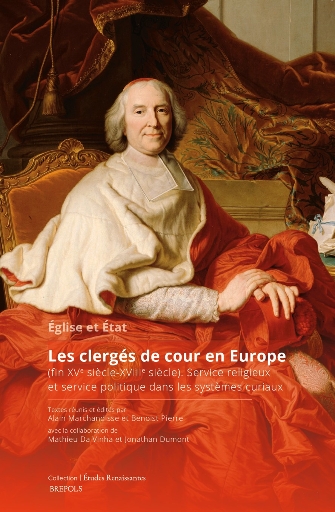
Église et État. Les clergés de cour en Europe (fin XVe siècle-XVIIIe siècle)
Service religieux et service politique dans les systèmes curiaux
show More to view fulltext, buy and share links for:Église et État. Les clergés de cour en Europe (fin XVe siècle-XVIIIe siècle) show Less to hide fulltext, buy and share links for: Église et État. Les clergés de cour en Europe (fin XVe siècle-XVIIIe siècle)En 2017 paraissait, dirigé par Monique Maillard-Luypaert, Alain Marchandisse et Bertrand Schnerb, et avec pour sous-bassement un colloque organisé à Lille et Tournai par ces mêmes historiens, un volume qui, sous le titre Évêques et cardinaux princiers et curiaux (XIVe-début XVIe siècle). Des acteurs du pouvoir, apportait un ensemble de contributions, notamment biographiques, sur cette figure paradigmique de l’homme d’Église appelé à exercer une action politique d’envergure, parce qu’il est issu d’un milieu familial qui l’y prédestine ou parce qu’il sert, à la cour, un prince, un roi, un pape. Sous une bannière commune – Église et État –, un second colloque, cette fois organisé à Versailles, s’est voulu à la fois le prolongement et l’aménagement conceptuel du premier à une époque plus récente, la période moderne, voire le début des temps contemporains. Le présent volume en renferme les actes. Ils s’insèrent dans cinq volets spécifiques : Rome, son clergé de cour, et celui des autres États ; le conseil politique ; les chapelles princières ; les confesseurs princiers et les clergés de cour dans le monde chrétien, catholique ou non.
-
-
-
Église, richesse et pauvreté dans l'Occident médiéval
L'exégèse des Évangiles aux XIIe-XIIIe siècles
show More to view fulltext, buy and share links for:Église, richesse et pauvreté dans l'Occident médiéval show Less to hide fulltext, buy and share links for: Église, richesse et pauvreté dans l'Occident médiévalHeureux, vous les pauvres : le Royaume des cieux est à vous. […] Mais malheureux, vous les riches : vous tenez votre consolation (Luc, 6, 20 et 24). Les appels à la pauvreté et au partage, les mises en garde contre les richesses s'avèrent extrêmement fréquents dans les textes évangéliques les plus célèbres de nos jours encore. L'objet de cet ouvrage est d'étudier leur écho dans la société occidentale des XII e et XIII e siècles, où les richesses issues du commerce commencent à affluer dans les villes et où les inégalités se creusent, tandis que la Bible demeure l'autorité par excellence.
L'auteur s'intéresse tout d'abord à l'élaboration par les moines et les clercs d'un idéal de pauvreté volontaire, qui ne s'impose qu'à partir du XII e siècle. Il étudie les étapes, les acteurs et les enjeux de cette construction, qui concerne tout à la fois l'interprétation de passages fondamentaux de l'Évangile, la place accordée aux laïcs et l'expression de la hiérarchie dans l'Église. L'affirmation de la pauvreté y apparaît indissociable de celle d'une forme de domination. Il pose ensuite la question de l'articulation de ce discours aux réalités sociales. L'exaltation de la pauvreté se traduit-elle par une hostilité à l'égard des richesses et des riches ? Par une condamnation des activités lucratives ? Par une revalorisation de l'image des miséreux ? Il apparaît plutôt - et c'est la thèse que soutient l'auteur - que la préoccupation essentielle des exégètes était de placer l'Église au coeur de la société, au centre des échanges, matériels comme symboliques, si bien que les riches firent l'objet de toutes les attentions, au risque d'en oublier les pauvres.
-
-
-
Émotions de Dieu
Attributions et appropriations chrétiennes (XVIe - XVIIIe siècle)
show More to view fulltext, buy and share links for:Émotions de Dieu show Less to hide fulltext, buy and share links for: Émotions de DieuParler de Dieu suppose de lui attribuer des qualités qui montrent combien sa nature diverge de celle de l'homme. De sa perfection découlent notamment l'impassibilité et l'immutabilité. Dès lors, comment parler d'émotions de Dieu, puisque les mouvements, le dérèglement et l'altération qu'elles présument renvoient, dès l'Antiquité, à la faiblesse et à la passivité humaines ? Ces émotions divines traversent pourtant bien l'Ancien Testament, qui présente un Dieu tour à tour affligé, offensé, en colère, aimant et prenant pitié de ses créatures. Ces anthropomorphismes doivent-ils être lus de manière allégorique, comme la preuve d'une inadéquation sémantique et d'une intention pédagogique ? Est-ce parce que ce sujet résiste que le vaste courant d'histoire des émotions l'a délaissé ? L'implication affective du Fils a pourtant été décisive pour appréhender la spécificité chrétienne et l'empathie divine comme source de consolation suprême.
Notre volume se situe à l'intersection de ce double angle mort thématique de l'histoire des émotions, et chronologique de l'histoire de la théologie de la souffrance de Dieu qui néglige l'époque moderne. Il propose d'élargir l'enquête aux gestes sociaux dans lesquels les émotions de Dieu sont impliquées. En quel sens peut-on parler d'émotions divines ? Par qui, dans quels cadres et à quelles intentions sont-elles mobilisées ? À quels titres sont-elles révélatrices de la difficulté à penser la divinité ? Les embarras narratifs, ontologiques, exégétiques et confessionnels auxquels donnent lieu ces émotions divines se déploient ici dans des cadres théologiques, homilétiques, littéraires, et plus largement oratoires, théâtraux et guerriers.
-
-
-
Énoncer / Dénoncer l’autre
Discours et représentations du différend confessionnel à l’époque moderne
show More to view fulltext, buy and share links for:Énoncer / Dénoncer l’autre show Less to hide fulltext, buy and share links for: Énoncer / Dénoncer l’autreCe volume est le fruit d’une enquête menée durant deux années sur les marques -enjeux, conceptions, interprétations et usages- de l’altérité religieuse. Il s’intéresse à la façon dont les acteurs, fidèles et artisans ou tenants d’une orthodoxie, l’instaurent et la revendiquent aussi bien dans un combat contre leurs adversaires confessionnels que dans leurs aspirations à un particularisme religieux. À travers les prétentions concurrentielles à la Vérité, il interroge autant les mécanismes d’élaboration d’une hétérodoxie que les tentatives de valorisation d’une dissidence spirituelle.Étudiant l’énonciation et la dénonciation du différend religieux, les travaux réunis cherchent à rendre compte des modalités d’affrontements rhétoriques et de la dimension lexicale des conflits idéologiques de l’Âge classique, opposants catholiques, protestants, orthodoxes ou musulmans en des luttes tant interconfessionnelles qu’intracommunautaires. Décortiquant les discours de rupture et d’exclusion, les enquêtes s’attachent tout particulièrement aux processus de construction de la figure de l’autre, aux efforts et aux effets de la stigmatisation de l’ennemi.
Les auteurs abordent ces conflits de croyance et ces rivalités de piété en analysant les stratégies discursives, les procédés de dénégation ou d’héroïsation, la production ou la manipulation d’images connotées et la véhémence d’un langage ciselé. Cette histoire sémantique de la différence fait aussi la part belle aux formes et aux modes qu’emprunte le combat religieux à travers la rhétorique législative, la littérature apologétique et les écrits polémiques, l’histoire morale et culturelle, l’homilétique et le raisonnement philosophique. Elle se présente comme une approche du rôle et du poids d’un combat langagier qui, sous la plume ou en chaire, amorce, jalonne, anime ou prolonge celui des armes. En s’interrogeant sur l’acte de nommer l’autre, cet ouvrage propose d’évaluer la force d’effraction de ce différend dans le champ de la croyance et sa place dans le développement d’une économie rhétorique normative de la foi.
Chrystel Bernat est chargée de conférences à l’École Pratique des Hautes Études et chargée d’enseignement à l’Institut Protestant de Théologie de Montpellier (Histoire du christianisme moderne). Auteur d’une thèse de doctorat sur les violences de religion au tournant du Grand Siècle, elle a codirigé Religion, secret, autorité. Pratiques textuelles et cultuelles en clandestinité (2011). Ses recherches portent sur l’histoire de la violence confessionnelle et les formes de radicalisme religieux. Elle travaille actuellement sur l’histoire de la ferveur, les pratiques de piété militantes et l’homilétique de résistance à l’oppression religieuse en France aux XVIIe et XVIIIe siècles.
Hubert Bost est directeur d’études à l’École Pratique des Hautes Études (chaire «Protestantismes et culture dans l’Europe moderne, XVIe-XVIIIe siècles». Auteur notamment de plusieurs ouvrages consacrés à la pensée de Pierre Bayle, il codirige l’édition critique de la correspondance générale de La Beaumelle. Ses travaux sur les liens entre protestantisme et Lumières portent en particulier sur l’articulation entre conviction religieuse et pensée rationnelle chez les écrivains huguenots des XVIIe et XVIIIe siècles en Europe.
-
-
-
Étienne Langton, prédicateur, bibliste, théologien
Études réunies
show More to view fulltext, buy and share links for:Étienne Langton, prédicateur, bibliste, théologien show Less to hide fulltext, buy and share links for: Étienne Langton, prédicateur, bibliste, théologienÉtienne Langton est probablement un homme-clé dans l’histoire du Moyen Âge. Son implication politique à la tête de l’Église d’Angleterre, en tant qu’archevêque de Canterbury, est bien connue, de même que son rôle dans la promulgation de la Magna Carta, qui s’efforce de trouver une solution aux crises qui secouent le pays. Cependant, tout en proposant des aperçus novateurs sur l’action politique d’Étienne Langton, la plus grande partie des études recueillies dans ce volume examinent les œuvres de celui qui était considéré comme l’un des principaux maîtres de son temps (il a enseigné à Paris durant plus de deux décennies). Il a en effet brillamment illustré les trois volets de l’enseignement des sciences sacrées, tels que les définit Pierre le Chantre, lire, disputer, prêcher. Lire, c’est étudier l’Écriture sainte; Étienne Langton a commenté la quasi-totalité des livres bibliques, en sachant à la fois recueillir toute la tradition qui le précède et ouvrir des voies nouvelles: le point est fait ici sur son herméneutique et sur ses méthodes d’exégèse, avec des études sur des livres bibliques précis, mais aussi sur son commentaire d’un texte majeur de la génération précédente, l’Histoire scolastique de Pierre le Mangeur. Disputer, c’est discuter des thèmes doctrinaux; il s’agit d’un travail théologique, avant même que la théologie ne soit définie comme une science à part entière et Étienne Langton illustre les genres principaux de la «somme» et de la «question», en mettant au service de ses analyses ses compétences particulières en matière de sciences du langage. Enfin, Étienne Langton a laissé un nombre impressionnant de sermons, dont la richesse thématique est grande et qui fournissent également des éléments précieux sur l’état de l’Église. À la charnière du xii e et du xiii e siècle, Étienne Langton pose les bases de ce que sera la culture universitaire du xiii e siècle et apparaît ainsi comme un auteur à la fois important et attachant.
-
-
-

Études d'exégèse médiévale offertes à Gilbert Dahan par ses élèves
show More to view fulltext, buy and share links for:Études d'exégèse médiévale offertes à Gilbert Dahan par ses élèves show Less to hide fulltext, buy and share links for: Études d'exégèse médiévale offertes à Gilbert Dahan par ses élèvesAprès les ouvrages classiques de Beryl Smalley et Henri de Lubac, les travaux de Gilbert Dahan ont renouvelé les études sur l’exégèse de la Bible en Occident chrétien au moyen âge. Tout d’abord, l’attention qu’il a portée aux méthodes mêmes de l’exégèse a mis en valeur les questions de critique textuelle et le schématisme de la démarche des exégètes. Mais son souci de caractériser une « herméneutique médiévale » a permis aussi de montrer combien exégèse « confessante » et exégèse « scientifique » (pour employer les catégories de Paul Ricoeur) construisent harmonieusement le sens, notamment chez les auteurs du XIIIe siècle.
Ces recherches ont été l’objet de son enseignement à l’École pratique des hautes études (Section des sciences religieuses), dans la chaire « Histoire de l’exégèse chrétienne au moyen âge ». Plusieurs de ses « élèves » ou auditeurs lui offrent le présent recueil d’études, qui illustrent la fécondité de son enseignement, au point qu’on peut parler d’un renouveau des études bibliques médiévales chez les jeunes chercheurs en France. Ses travaux ont aussi donné des outils d’analyse aux historiens et sociologues du moyen âge et même de l’époque moderne.
Plusieurs des aspects de cette recherche sont ici illustrés : critique textuelle à l’époque carolingienne, étude de thèmes ou de versets particuliers, méthodes des commentateurs - mais aussi présence de la Bible en dehors même de l’exégèse, dans les traductions, dans la réfl exion politique ou dans la controverse avec les juifs.
Annie Noblesse-Rocher est professeur d’histoire du christianisme médiéval et moderne à la Faculté de théologie protestante, Université de Strasbourg. Elle poursuit des recherches sur les commentaires monastiques médiévaux (L’expérience de Dieu dans les sermons de Guerric, abbé d’Igny, xii e siècle, Paris, Cerf, 2005) et sur ceux de la première modernité (en particulier sur Martin Bucer, dont elle édite des oeuvres).
Contributeurs : Claire Angotti, Emmanuel Bain, Timothy Bellamah, Hedwige Boff y-de Bouteiller, Caroline Boucher, Adrien Candiard, Caroline Chevalier-Royet, Sophie Delmas, Maria Valeria Ingegno, Kristina Mitalaité, Brigitte Prévot, Anne-Zoé Rillon-Marne, Lydwine Scordia, Sumi Shimahara, Claire Soussen-Max.
-
-
-
Études de langue et de littérature médiévales offertes à Peter T. Ricketts à l’occasion de son 70ème anniversaire
show More to view fulltext, buy and share links for:Études de langue et de littérature médiévales offertes à Peter T. Ricketts à l’occasion de son 70ème anniversaire show Less to hide fulltext, buy and share links for: Études de langue et de littérature médiévales offertes à Peter T. Ricketts à l’occasion de son 70ème anniversaire«Honorary Professor» de Français à l’Université de Birmingham, et Professeur Émérite à Queen Mary and Westfield, Université de Londres, Peter T. Ricketts a mené une carrière longue et remarquable dans le domaine de la Philologie Romane, et dans les études occitanes en particulier.
Outre son rôle majeur dans l’animation de l’Association Internationale d’Études Occitanes (AIEO), Peter T. Ricketts a consacré de nombreuses années aux études occitanes. Son œuvre est plus spécialement marquée par l’édition encore inachevée (avec Cyril P. Hershon) du Breviari d’Amor de Matfre Ermengaud, et l’élaboration de la Concordance de l’Occitan Médiéval (COM), vaste banque de données appelée à terme à couvrir l’ensemble des textes occitans du moyen âge et mettant à la disposition des chercheurs un outil de travail exhaustif et performant. La publication de la première tranche consacrée à la poésie des troubadours (Brepols 2001) a déjà recueilli un accueil très favorable de la critique et la seconde vient de paraître.
Le présent recueil de Mélanges réunit les travaux de 63 spécialistes de la littérature médiévale, dans des domaines aussi variés que l’histoire, la littérature, la linguistique, la philologie, la musicologie, la métrique ou la philosophie, explorant des matériaux et des sources de diverses provenances, en ancien français et en ancien occitan, mais aussi en latin médiéval, castillan, catalan, moyen-haut-allemand, hispano-arabe, hébreux.
L’ouvrage est divisé en deux sections principales, la première étant consacrée aux textes non lyriques: roman, épopée et littérature religieuse; la seconde à la poésie des troubadours, soit naturellement à leur production lyrique, à ses sources et son influence, aux vidas qui accompagnent leur transmission, aux troubadours eux-mêmes, mais aussi à leur production non lyrique tels que textes proverbiaux et ensenhamens. Ces Mélanges incluent également quelques éditions de textes, quelquefois inédits. Leur ensemble constitue un panorama très complet des recherches actuelles, avec des avancées substantielles dans le domaine des études médiévales.
-
-
-
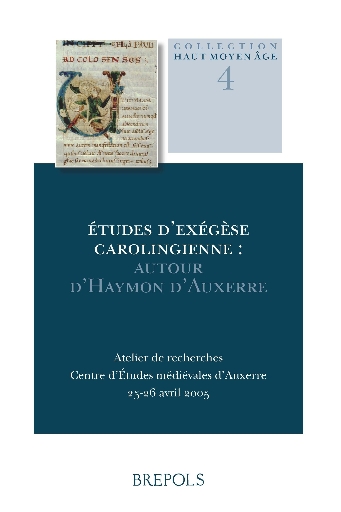
Études d’exégèse carolingienne: autour d’Haymon d’Auxerre
Atelier de recherches, Centre d’études médiévales d’Auxerre, 25-26 avril 2005
show More to view fulltext, buy and share links for:Études d’exégèse carolingienne: autour d’Haymon d’Auxerre show Less to hide fulltext, buy and share links for: Études d’exégèse carolingienne: autour d’Haymon d’AuxerreL’interprétation juste de la Bible constitue l’un des principaux enjeux de la renaissance carolingienne. Révéler le sens du Livre, en partie déterminé par la tradition exégétique, revient à fournir aux réformateurs modèles et prescriptions. En cela, l’exégèse est une source majeure non seulement pour l’histoire culturelle, mais aussi pour l’histoire des représentations. Pourtant, les commentaires bibliques demeurent, aujourd’hui encore, peu utilisés par les historiens, en partie parce que les textes sont souvent inédits.
C’est à ces sources que s’attache le présent volume, rassemblant les contributions d’un atelier de recherches tenu à Auxerre les 25 et 26 avril 2005. Le champ balayé par ces études, centrées sur la figure d’un exégète carolingien majeur, Haymon d’Auxerre, est vaste: critique d’authenticité, examen de la tradition manuscrite, comparaison avec les sources et les contemporains du moine d’Auxerre pour comprendre la spécificité de sa pensée. Il en résulte une connaissance plus fine non seulement de l’exégèse du maître auxerrois, mais aussi des échanges entre lettrés carolingiens et de la postérité médiévale de leurs œuvres.
-
-
-

Être bénédictin sous l’Ancien Régime
La congrégation de Saint-Maur (1618-1790)
show More to view fulltext, buy and share links for:Être bénédictin sous l’Ancien Régime show Less to hide fulltext, buy and share links for: Être bénédictin sous l’Ancien RégimeLa congrégation bénédictine de Saint-Maur est l’ultime réforme bénédictine en France sous l’Ancien Régime. Elle toucha cent quatre-vingt-dix monastères d’héritage médiéval qui furent pour la plupart reconstruits. Entre réforme catholique et Lumières, les mauristes firent de l’érudition historique et patristique un domaine de prédilection et d’expression à la fois intellectuelle et religieuse qui marqua profondément la reconstruction monastique du XIXe siècle.
-
-
-
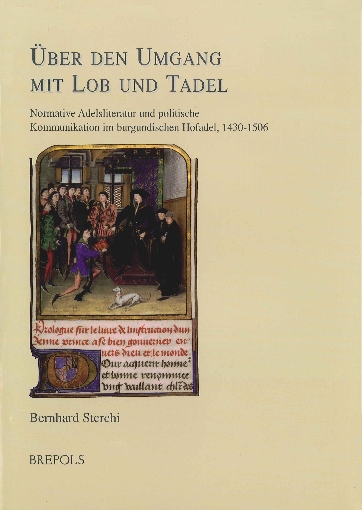
Über den Umgang mit Lob und Tadel
Normative Adelsliteratur und politische Kommunikation im burgundischen Hofadel, 1430-1506
show More to view fulltext, buy and share links for:Über den Umgang mit Lob und Tadel show Less to hide fulltext, buy and share links for: Über den Umgang mit Lob und TadelDer burgundische Hofadel des 15. Jahrhunderts kannte eine Vielzahl von Texten, die ihm von adligem Heldentum und Ruhm erzählten, ihm das Ungenügen der privilegierten Geburt vorhielten und ihn zu sittlicher Überlegenheit anspornten. Doch wie äußert sich die Wirksamkeit dieser normativen Adelsliteratur? Das vorliegende Buch verortet sie in einem bestimmten Teil des Leserverhaltens, nämlich in der persuasiven politischen Kommunikation. Diese These wird durch drei Argumente gestützt. Erstens enthält die normative Adelsliteratur nur selten konkrete Handlungsanweisungen. Vielmehr bietet sie eine Referenzordnung der Schlüsselbegriffe, Argumente, Autoritätenzitate und Anekdoten, mit deren Hilfe der Leser seine Werturteile bilden und begründen kann. Zweitens finden sich diese literarisch vermittelten Referenzwerte genau dort in der politischen Kornmunikation wieder, wo Werturteile vermittelt wurden. Dies war der Fall, wenn etwas legitimiert wurde, noch mehr aber, wenn das Ansehen von Personen gestaltet wurde. Gerade solche bewertende Kommunikationshandlungen waren drittens im burgundischen Hofadel in wesentlichen politischen und sozialen Feldern erfolgsrelevant.
Auf diese Weise gelingt ein anderer Blick auf das moralische Selbstverständnis des burgundischen Hofade1s. Die typischen Adelstraktate, die eigenen Versuche einzelner Adliger auf diesem Gebiet, das komplexe Verhältnis zur zeitgenössischen Chronistik, aber auch die politischen Verfahren im Orden vom Goldenen Vlies rücken ins Zentrum. Hier tritt der Adel im Umgang mit Wertvorstellungen und deren Zuschreibung zutage. Dieser Umgang mit Lob und Tadel- und dessen politische Relevanz - tragen zum Verständnis bei, weshalb der burgundische Hofadel seine normative Selbstvergewisserung mit solcher Hingabe inszenierte und weshalb er so streng auf moralische Konformität achtete.
-
-
-
Œuvres, 3
De archa Noe. Libellus de formatione arche
show More to view fulltext, buy and share links for:Œuvres, 3 show Less to hide fulltext, buy and share links for: Œuvres, 3Les deux oeuvres De archa Noe, Libellus de formatione archae, occupent une place singulière dans la production du maître de Saint-Victor. Ils forment d’abord une somme morale ou tropologique, tout comme le De sacramentis donnera une somme allégorique, et à ce titre livrent tous les thèmes porteurs de la spiritualité de Hugues. Ils sont ensuite comme au centre de sa carrière enseignante, mentionnant des traités déjà rédigés et en annonçant d’autres. La place de Hugues tant à Saint-Victor que dans le milieu des écoles parisiennes est déjà acquise et reconnue. Enfin nos écrits mettent en oeuvre des pédagogies visuelles qui lors d’entretiens réglés menés oralement, s’appuient sur un diagramme support des expositiones orales. La mise par écrit de ces conférences (qui donnera le De archa Noe) fut suivie de la rédaction de directives (qui seront le Libellus) par lesquelles un lecteur puisse reconstruire le diagramme que les auditeurs avaient eu sous les yeux.
-
-
-
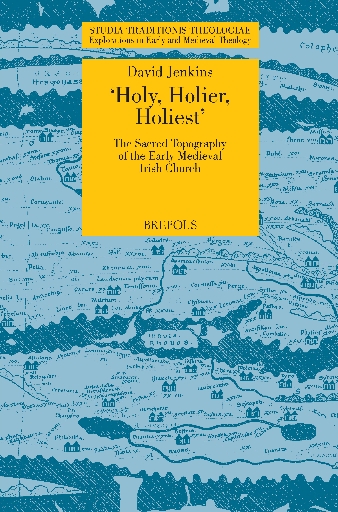
‘Holy, Holier, Holiest’: The Sacred Topography of the Early Medieval Irish Church
show More to view fulltext, buy and share links for:‘Holy, Holier, Holiest’: The Sacred Topography of the Early Medieval Irish Church show Less to hide fulltext, buy and share links for: ‘Holy, Holier, Holiest’: The Sacred Topography of the Early Medieval Irish ChurchThis book explores the morphology of early medieval Irish religious settlement. It seeks to shift the focus of academic interest away from simply the materiality of settlement towards a greater concern for its possible theological significance. The critical literature is reviewed and the archaeological and literary evidence revisited in search of evidence for a consistent early medieval Irish schema for the layout of religious settlement.
This study suggests that the enclosure and zoning of religious space was primarily inspired by depictions of the Jerusalem Temple through the medium of a universally received scriptural ‘canon of planning’. The distinctive early Irish religious landscape is a result of the convergence of this Christian exemplar of ordered holy space with vernacular building forms. These building forms were shaped by the legacy of Ireland’s recent pagan past whose architectural leitmotif was the circular or sub-circular form, in contrast to the buildings described in Christian texts.
Some of the traditional assumptions about the possible heterodox nature of the ecclesiology of the early medieval Irish church are also challenged. Irish religious topography is set within the context of a universal Christian understanding of holy space which impacts upon the topography of religious settlement not just in Ireland but further afield in Anglo-Saxon England, Gaul and the Middle East. In this the book, like many other recent studies, challenges the presumption that there was a ‘Celtic church’ distinctive in its practices from the wider church, while documenting the local contribution to Christian architecture.
Rev. Canon Dr David Harold Jenkins is an Anglican clergyman. Presently he is a residentiary canon at Carlisle Cathedral and Director of Education for the Diocese of Carlisle.
-
-
-
‘Lest She Pollute the Sanctuary’
The Influence of the Protevangelium Iacobi on Women’s Status in Christianity
show More to view fulltext, buy and share links for:‘Lest She Pollute the Sanctuary’ show Less to hide fulltext, buy and share links for: ‘Lest She Pollute the Sanctuary’This work explores a second-century text, the Protevangelium Iacobi, and, by examining current scholarship on the subject, assesses the way it has influenced the Christian perception of women and the ordering of their lives through the centuries down to the present day. It demonstrates how Mary, as she is presented in this text with extreme and unreal emphasis on her purity, has been held up as an unattainable model for all Christian women and takes as a case study the lives of contemplative women in the Roman Catholic church, showing how the image of Mary impossibly secluded in the temple has been partly responsible for their enclosure. By exploring the way female biological processes have been allowed to intrude on the sacred, tracing this influence from the Old Testament, through this text and its connection with Mary to the present day, it argues that this has been a significant factor in the denial of presbyteral ordination to women in some Christian churches. One of the original features of this work is the tracing of art work depicting scenes from the text across the Christian world, thus demonstrating the breadth of its influence, right down to New Age writings today.
-
-
-
‘Madness’ in the Ancient World: Innate or Acquired?
From Theoretical Concepts to Daily Life
show More to view fulltext, buy and share links for:‘Madness’ in the Ancient World: Innate or Acquired? show Less to hide fulltext, buy and share links for: ‘Madness’ in the Ancient World: Innate or Acquired?This is the first book volume ever to study the ‘difficult’ subject of congenital, intellectual disability in the ancient world. The contributions cover the Ancient Near East, Egypt and the Graeco-Roman world, up to the late ancient period, China, the rabbinic tradition, Byzantium, the Islamic world, and the Middle Ages in the Latin West. The engaging and thought-provoking chapters combine careful textual analysis with attention to the material evidence and comparative perspectives, not the least those offered by disability history for recent periods in history.
-
-
-
‘Otherness’ in the Middle Ages
show More to view fulltext, buy and share links for:‘Otherness’ in the Middle Ages show Less to hide fulltext, buy and share links for: ‘Otherness’ in the Middle AgesAlthough ‘Otherness’ is an extremely common phenomenon in every society, related research is still at its beginnings. ‘Otherness’ in the Middle Ages is a versatile and complex theme that covers a great number of different aspects, facets, and approaches: from non-human monsters and cultural strangers from remote places up to foreigners from another country or another town; it can refer to ethnic, cultural, political, social, sexual, or religious ‘Otherness’, inside or outside one’s own community. In any case, however, ‘Otherness’ is a subjective phenomenon depending on personal views and ascriptions, an issue of ‘imagination’ and experience rather than ‘reality’. There is neither one single model of alterity nor is ‘Otherness’ a stable phenomenon, but it changes over time and according to the cultural context. All this calls for methodological reflection and needs thorough investigation.
The methodological introduction and the 18 contributions of this volume demonstrate the great diversity of the theme and its different manifestations and perspectives. They tackle the problem from distinct angles and disciplines (history, art history, archaeology, literary history, and philology) in a wide chronological and thematic frame, using different methodological approaches, dealing with different areas (from Northern and Southern Europe to Byzantium and India), perspectives (including law, social order, the past, a sea), and diverse kinds of sources. They examine all kinds of ‘Otherness’ mentioned above, highlight demarcation and rejection, aversion or acceptance, assimilation and integration, thus relativizing a strict dichotomy between ‘the Self’ and ‘the Other’ or between inside and outside. This volume is so far the most comprehensive attempt to tackle the huge problem of ‘Otherness’ in the Middle Ages.
-
-
-
‘The Gods Have Faces’
The Biblical Epigrams and Short Poems of Hildebert of Lavardin
show More to view fulltext, buy and share links for:‘The Gods Have Faces’ show Less to hide fulltext, buy and share links for: ‘The Gods Have Faces’Hildebert of Lavardin is one of the great poets of the Middle Ages, praised for his elegant style by his contemporaries and by modern scholars alike. He occupies a seminal position in the revival of learning in the late Middle Ages known as the Twelfth Century Renaissance, and his mastery of classical Latin style was so refined that some of his works were long considered products of Antiquity. This collection of Hildebert's biblical epigrams and short poems introduces English-speaking readers to the best works of this neglected poet and places them in the context of his life and literary career. The translations attempt to bring the reader as close as possible to experiencing these poems in their original Latin while still being readable and comprehensible, facilitated by notes and commentary. Hildebert's poetry is sometimes challenging, dense and complicated, yet his rhetoric is often beautiful, even magnificent.
-
-
-
‘The loss of a minute, is just so much loss of life’
Edward Robinson and Eli Smith, Generators of Change in Holy Land
show More to view fulltext, buy and share links for:‘The loss of a minute, is just so much loss of life’ show Less to hide fulltext, buy and share links for: ‘The loss of a minute, is just so much loss of life’Perhaps no other Palestine / Holy Land explorer has received as much attention as Edward Robinson, the American philologist, theologian, and historical geographer responsible for laying the foundations for modern historic-geographical study of the Holy Land. Surprisingly, to date, almost no one has delved into Robinson’s archive to illuminate his Holy Land expeditions, the writing of his monumental Biblical Researches, and the compilation of his fine maps. Similarly, no one has conducted a detailed study of the archive of Eli Smith, American Board of Commissioners of Foreign Missions Beirut missionary and Robinson’s travel companion, for the same purposes. Fluent in Arabic and highly familiar with the region and its inhabitants, Smith’s contribution to the expedition and to the Biblical Researches was considerable as his archive reveals.
Investigating documents in both Robinson’s and Smith’s archives, the author of the present book became quickly convinced that much of the accepted narrative concerning Robinson's Holy Land studies should be re-evaluated and, consequently, rewritten. Several issues, for lack of relevant sources, have not yet been addressed by scholars. The story of Robinson and Smith’s expedition and writing of the Biblical Researches that emerges from their extensive correspondence underscores the difficulties they overcame, and the accuracy and magnitude of their scholarship in an age bereft of modern technology.
-
-
-
‘This Earthly Stage’
World and Stage in Late Medieval and Early Modern England
show More to view fulltext, buy and share links for:‘This Earthly Stage’ show Less to hide fulltext, buy and share links for: ‘This Earthly Stage’The thirteen essays collected in ‘This Earthly Stage’ explore intersections between the world as stage and the stage as world in late medieval and early modern England. The volume features studies of stages both familiar and unfamiliar, and worlds old and new - from the ritual performance of funerals for the fifteenth-century London elite to the electronic recreation of Shakespeare on the Internet. The essays engage with a variety of scholarly fields, including art and iconography, cultural and social history, digital humanities, literature, myth, philology, and philosophy. Most studies examine performative elements of Shakespeare’s works in relation to a representative selection of other plays from the dramatic genres in which he wrote, while they also analyse broader topics which traverse a number of plays, such as kingship and rites of civic performance in relation to stage drama. All of the essays consider the overarching issue of representation in late medieval and early modern English drama and culture through a range of theoretical approaches. This volume offers a valuable contribution to contemporary medieval and early modern scholarship, with a particular interest for those researching and teaching early modern English drama and culture.
-
-
-
‘With Our Backs to the Ocean’: Land, Lordship, Climate Change, and Environment in the North-West European Past
Essays in Memory of Alasdair Ross
show More to view fulltext, buy and share links for:‘With Our Backs to the Ocean’: Land, Lordship, Climate Change, and Environment in the North-West European Past show Less to hide fulltext, buy and share links for: ‘With Our Backs to the Ocean’: Land, Lordship, Climate Change, and Environment in the North-West European PastThis collection of ten essays celebrates the life and career of Dr Alasdair Ross, one of Britain’s foremost environmental historians, who died in 2017. Inspired by Ross’ own research interests, the chapters gathered here explore interlinked themes of land management and property rights, terrestrial and aquatic resource exploitation, mortality crises, and environmental change, viewed largely through the lens of the Scottish experience within the broader context of the eastern North Atlantic region and covering a chronology that spans from the sixth century ce up to the present. Including a previously unpublished paper by Ross himself, which overturns long-held perceptions of fiscal regimes in medieval Scotland, the contributors present radically revisionist or wholly new analyses of key documents and datasets, mostly through applying an interdisciplinary ‘environmental turn’ to primary record and narrative sources, or advancing new methodological approaches to systems analysis. From saintly interactions with nature to monastic exploitation of natural resources, charter records of land-ownership to the physicality of the landscapes recorded on parchment, and the human cost of subsistence and mortality crises, these papers humanize the discourse around historical climate and environmental change.
-
-
-
“Omnium Magistra Virtutum”
Studies in Honour of Danuta R. Shanzer
show More to view fulltext, buy and share links for:“Omnium Magistra Virtutum” show Less to hide fulltext, buy and share links for: “Omnium Magistra Virtutum”Danuta Shanzer is a scholar of international caliber, and this volume honors her career on the occasion of her sixtyfifth birthday (or thereabouts). Most of the contributors are current or former students, colleagues, collaborators and friends, from Oxford, Berkeley, Cornell, Illinois, the University of Vienna, and elsewhere. They have chosen topics appropriate in some way to the honoree’s scholarly interests. The volume’s center of gravity is in late antiquity and early medieval Gaul, but some contributions reach backwards to the Roman period or forward to the later Middle Ages. The contributions embrace a number of authors in whom Shanzer herself has been particularly interested (Augustine, Martianus Capella, Boethius, Avitus of Vienne, Gregory of Tours), but the range and variety of the volume is also representative of her approach to the field.
-
-
-
“The Letter Killeth”
Redeeming Time in Augustine’s Understanding of the Authority of Scripture
show More to view fulltext, buy and share links for:“The Letter Killeth” show Less to hide fulltext, buy and share links for: “The Letter Killeth”The experience of time is always momentous and stimulating to Augustine’s theological reflection. This book asserts that even Augustine’s concept of the authority of Scripture was embedded in his awareness of time. This “awareness” was rooted in the tension between the “already” and “not yet” of the “last days” that permeated the entire New Testament theological outlook.
This does not mean that it is reflections on time that is the determining feature of a particular complex debate, or the origin of a particular work in Augustine’s corpus. However, this work argues that “time” is a factor which need to be taken into greater account than scholarship heretofore has done. Accordingly, the author specifically delineates how Augustine’s experience of time as a living, ongoing and creative tension critically determined his theological stances towards scriptural authority.
The book shows how Augustine’s awareness of this temporal tension was roused by the acceptance of his own temporality and creaturehood which brings to the fore the importance of the incarnate Christ. Exploring how Augustine and his contemporaries grappled with the existential implications of this tension in time, this work asserts that the authority of Scripture is not the authority of “the Book” in the modern sense but is related to more complicated sources of authority that are linked to this specific notion of time.
-
-
-
“Who is Sitting on Which Beast?” Interpretative Issues in the Book of Revelation
Proceedings of the International Conference held at Loyola University, Chicago, March 30-31, 2017
show More to view fulltext, buy and share links for:“Who is Sitting on Which Beast?” Interpretative Issues in the Book of Revelation show Less to hide fulltext, buy and share links for: “Who is Sitting on Which Beast?” Interpretative Issues in the Book of RevelationThe Revelation of Jesus Christ, better known as the Apocalypse of John, or simply the Book of Revelation, has always fascinated its readers, both religious and non-religious. Its transmission and reception in a Christian context have given rise to a wide variety of interpretations and controversies. At the heart of this revelation are the enigmatic figures of a pregnant woman appearing in heaven and then fleeing into the desert, a prostitute appearing in the desert and riding a beast, and then the bride of the Lamb, as well as a great city called Babylon, Sodom, and Egypt. Cities, beast, and prostitute are usually interpreted as thinly veiled references to Rome and its empire, and in particular to the emperor Nero.
However, this reading raises a number of interpretative problems concerning the relationship between these different female figures and their relation to the beast, which duplicates into a beast from the sea and a beast from the land, and concerning the city that lies beneath Babylon. Although they do not all share the exact same point of view on the Apocalypse of John and on the solutions to these interpretative problems, the contributions gathered in this volume all question the received ideas in one way or another. What they have in common is a regard for the Apocalypse of John as a text strongly rooted in the Judaism of its time, and they place great emphasis on interpreting the text through attention to its author’s use of the Jewish Scriptures.
-