


Browse Books
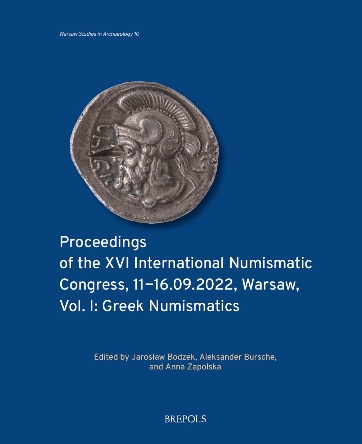
Proceedings of the XVI International Numismatic Congress, 11–16.09.2022, Warsaw, Vol. i: Greek Numismatics
The XVI International Numismatic Congress held in Warsaw Poland in September 2022 was a landmark event drawing the largest number of participants in its history. With over 550 papers presented during thematic sessions and round tables this congress showcased the latest advancements and research in the field of numismatics from leading experts and scholars in their field.
A curated selection of papers from the conference have now been drawn together into peer-reviewed conference proceedings representing a comprehensive spectrum of numismatic studies from antiquity to modern times. Each paper is meticulously illustrated with high-quality images often of unique specimens along with detailed diagrams maps and die/typological chains. Topics covered include coins and coin finds medals tokens banknotes the history of collections and collecting and cutting-edge chemical analyses and technologies used in coin examination.
This volume the first in four thematic volumes focuses on Greek numismatics and comprises fifty-nine chapters exploring different elements of Greek coinage as well as touching on coins from ancient India.
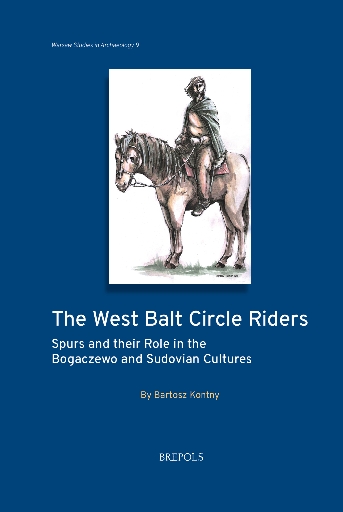
The West Balt Circle Riders
Spurs and their Role in the Bogaczewo and Sudovian Cultures
The spurs of horse riders have long been acknowledged as an important item of grave furniture in the Late Roman and Migration period burials of Poland a reflection of the high social position held by the deceased. Yet while spurs have been studied at a general level and typo-chronological studies have been conducted on spurs found in southern and central Poland no such research has so far been conducted on finds from the West Balt Circle in north-eastern Poland. This volume is an attempt to rectify the situation by offering a thorough examination of finds attributed to the Bogaczewo and Sudovian Cultures. The author here offers a comprehensive assessment of surviving materials from the period many of which are scattered through museums across Europe together with an in-depth analysis of archival sources (included among them the private inventories of archaeologists working in the pre-war period) in order to reconstruct our understanding of the furnishings and data relating to spurs. This detailed research carefully contextualized against our wider understanding of Barbarian Europe offers an important new reference for our understanding both of the West Balt Circle and its inter-cultural relations with surrounding regions as well as of the symbolic meaning of spurs and their significance in burial rites.
The Co-production of Judaism, Christianity, and Islam
Artefacts, Rituals, Communities, Narratives, Doctrines, Concepts
Judaism Christianity and Islam have always formed re-formed and transformed themselves in conversation. That is these religions have come to exist in all their varieties by interacting with thinking about and imagining each other. In this sense they are co-produced linked by a dynamic and ongoing inter-dependence. The fifteen essays collected in this volume explore moments of such religious coproduction from the second to the twenty-first century from early pilgrimage sites to social media. The case studies range across textual and material cultures showing how a variety of artefacts coins rituals communities narratives theological doctrines and scholarly concepts were all co-produced across the three religious traditions. In so doing they present a panorama of possibilities from the past as well as a taxonomy that can help us think about the future of religious co-production. An introductory essay describes the advantages of approaching the past present and future of these religions through the lens of co-production and reflects on crucial methodological issues related to the understanding of Judaism Christianity and Islam as co-produced religions.
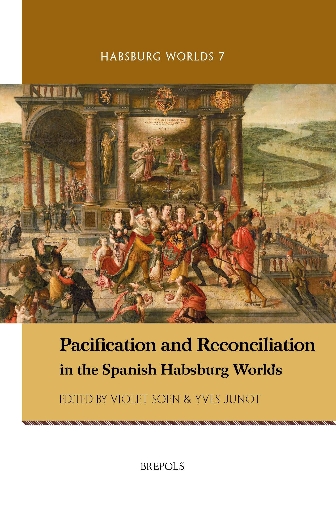
Pacification and Reconciliation in the Spanish Habsburg Worlds
This is the first volume to analyze pacification strategies within the Spanish Monarchy on a global level. It deals with the development and aftermath of the many early modern revolts on the Iberian and Italian Peninsula the Sicilian and Sardinian islands the cities along the North Sea and the Spanish Americas. These comparative studies uncover the different ways in which the Spanish Monarchy dealt with rebellion from cities and constituencies ranging from military responses and repression to offers for negotiation and reconciliation. They also point out common characteristics of these pacification processes such as the promises of pardon the granting of grace and the instruction of peace envoys. The different chapters each accompanied by an edition of sources show how the reconciliation and reincorporation into the Spanish Habsburg orbit proved to be a painstaking process with an unpredictable outcome.

Uist Unearthed
5000 Years of Prehistory and History Told through the Interactive Exploration of Five Archaeological Sites
People have been living in Uist’s island landscapes for millennia; shaping and shaped by the unique environments of machair and moorland we see today. Uist Unearthed tells the story of 5000 years of the islands’ prehistory and history through five key archaeological sites.
Based on the award-winning Uist Virtual Archaeology Project this interactive book brings Uist’s past to life. Readers are invited to dig deeper and discover Uist’s unique archaeology through colourful and creative mixed media including illustrations infographics and photography enhanced with state-of-the-art augmented reality.
This book provides an excellent introduction to Uist’s archaeology for novices and professionals alike. It discusses the importance of Gaelic language and culture in our interpretation and understanding of archaeological landscapes. It is for all those interested in exploring alternative ways of reimagining interpreting and presenting the past through digital storytelling.

L’amour au Moyen Âge
Est-il un, est-il pluriel ?
Peu de notions médiévales sont aussi vastes et semble-t-il aussi hétérogènes que l’« amour » puisque de la convoitise à la charité de la passion amoureuse à la piété filiale de l’amitié entre égaux à l’amour du prince de l’amour de Dieu à l’amour du prochain en passant par celui envers soi-même ou ses ennemis il reçoit les noms les plus variés vise les objets les plus divers encourt les jugements moraux les plus contraires. Ceci soulève plusieurs questions au centre des échanges entre médiévistes de toutes disciplines: histoire philosophie théologie lettres latines et romanes histoire du droit histoire de l’art etc. Pourquoi observe-t-on soudain une vogue littéraire de l’amour au xiie siècle chez les poètes d’oc et d’oïl les exégètes du Cantique des cantiques les théologiens de la Trinité ou de la charité les maîtres de la vie intérieure les commentateurs du pseudo-Denys les philosophes de l’amor honestus ou de l’amitié les canonistes définissant le mariage les théoriciens de l’amour du prince et de ses sujets les amants eux-mêmes dont on commence à conserver les correspondances enflammées? Ensuite comment écrivains et docteurs tout en distinguant soigneusement les diverses sortes d’amour les intègrent-ils dans une même conception unitaire? Enfin pourquoi dans les trois derniers siècles du Moyen Âge se met-on à opposer de plus en plus la connaissance et l’amour comme deux facultés de l’âme symétriques et antithétiques et quels sont les enjeux jusqu’à aujourd’hui de cette joute entre l’amour et la connaissance ?
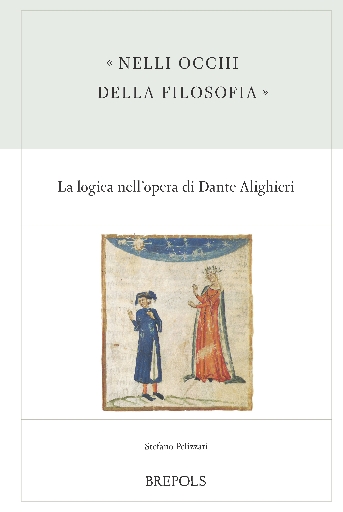
«Nelli occhi della filosofia». La logica nell’opera di Dante Alighieri
Codificata a partire da una sezione specifica del corpus aristotelico la logica rappresentava nel Medioevo latino quell’"arte delle arti" (ars artium) che studiava le regole del ragionamento corretto e le era riconosciuta una universalità di tipo strumentale. Come notato sin dai primi biografi e commentatori Dante dimostra in svariate occasioni una maestria e una padronanza della materia del tutto degne per dirla col Boccaccio di un «maraviglioso loïco». Giustamente celebri sono i versi di Inferno XXVII in cui «un d’i neri cherubini» con un raffinato ragionamento strappa l’anima di Guido da Montefeltro all’impotente San Francesco («forse / tu non pensavi ch’io loïco fossi!» v. 123); ma è soprattutto nel Convivio nella Monarchia e nella controversa Questio de aqua et terra che l’Alighieri sfoggia una competenza difficilmente riducibile alla consultazione occasionale di qualche ‘manuale’. Questo studio analizza sistematicamente i passaggi dell’opera dantesca riconducibili a questo specifico ambito disciplinare; e offre una panoramica sugli ambienti culturali in cui il Poeta avrebbe verosimilmente potuto formarsi (Firenze Bologna la Toscana occidentale la marca Trevigiana). Da un lato quindi si inserisce nel fortunato filone di studi che si è occupato di valutare la conoscenza che Dante poté avere delle dottrine di Aristotele e dei suoi interpreti. Dall’altro tenta di ricostruire i tempi i luoghi e i modi in cui «peregrino quasi mendicando» poté acquisire tale competenza specialistica. In tal modo non viene solo illuminato un lato inesplorato di questo eccezionale «amatore di sapienza» ma viene anche offerto uno scorcio privilegiato sullo stato delle conoscenze filosofiche in Italia fra XIII e XIV secolo.
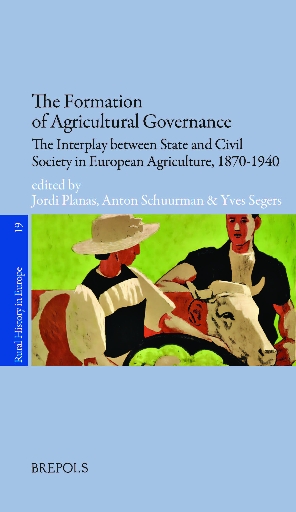
The Formation of Agricultural Governance
The Interplay between State and Civil Society in European Agriculture, 1870-1940
This book unravels how the agricultural sector and the rural world in Europe became more and more organised within capitalism in the years 1870-1940 and this with the aim of tackling the important challenges of the time. The focus is not so much on the myriad of individual farmers’ actions but on the collective efforts undertaken through the interplay between the state and the agricultural civil society.
A wide variety of actors from landowners associations farmers’ unions cooperatives scientific institutions and researchers to farmers themselves (or civil society) played a critical role in the process of drafting a policy agenda developing agricultural policies and were instrumental in implementing them in close relationship with the state. The result was a metamorphosis from mobilisation and representation of agrarian interests to a form of self-government or co-government of the agricultural sector at the national level which would only reach its highest point after the Second World War.
These issues are explored by established rural historians covering a period of seven decades (1870-1940). The papers provide a wide geographical perspective from the north of Europe to the Mediterranean.
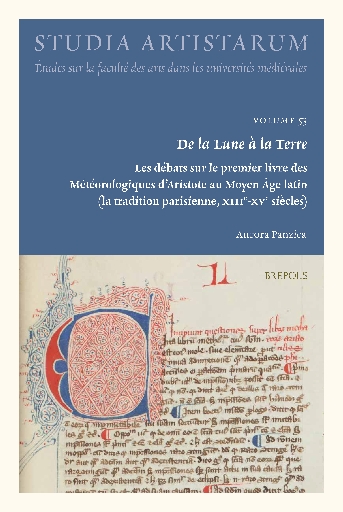
De la Lune à la Terre
Les débats sur le premier livre des Météorologiques d’Aristote au Moyen Âge latin (la tradition parisienne, XIIIe-XVe siècles)
La météorologie ancienne et médiévale se distingue de son équivalent contemporain par un domaine d’études autrement plus vaste s’étendant bien au-delà des phénomènes atmosphériques. Le premier livre des Météorologiques d’Aristote aborde en effet des sujets aussi divers que l’action de la sphère céleste sur la région terrestre les liens entre mouvement lumière et production de chaleur les rapports quantitatifs entre les quatre éléments la formation des comètes et de la Voie lactée l’origine et le mouvement des fleuves les variations périodiques dans la répartition entre mers et terres sèches. Fondée sur l’analyse d’une grande quantité de textes inédits et prenant la forme d’un voyage de la Lune à la Terre la présente étude explore les débats que ces sujets ont suscités chez les maîtres scolastiques qui de la fin du XIIe au milieu du XVe siècle se sont confrontés au texte aristotélicien dans le cadre de leur enseignement à la Faculté des arts.
Ælius Aristide et Xénophon
Regards d’un orateur gréco-romain sur un classique de l’hellénisme
Several ancient literary sources show that Xenophon was regarded during the Imperial period as a preeminent model. This study looks at how Xenophon was received in the speeches of Ælius Aristides – an angle that has not been explored until now. The speeches examined include the Platonic speeches (or. 2-4) the speech Concerning a remark in passing (or. 28) the declamation On behalf of making peace with the Athenians (or. 8) the group of the five Leuctran orations (or. 11-15) the evidence for the lost declamation Callixenus the Panathenaicus (or. 1) and the speech To Rome (or. 26). Greek history plays a key role in this inquiry especially since Aristides showed a particular interest in the aftermath of the Battle of Leuctra. The historical allusions to Xenophon’s Hellenica reveal Aristides’ erudition and his attention to the speeches within that work. Studying how Aristides draws on Xenophon can help deepen our understanding of his orations and open up new directions for research on Xenophon’s reception.
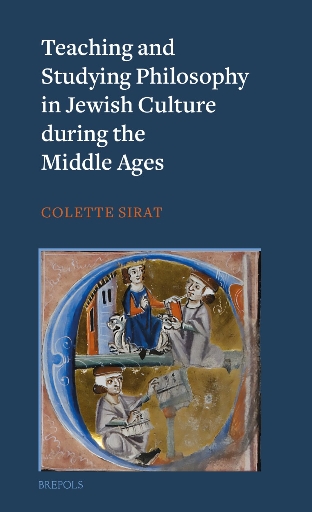
Teaching and Studying Philosophy in Jewish Culture during the Middle Ages
This book offers the first survey of philosophical pedagogy in Jewish culture during the Middle Ages with a focus on Northern France the Provence Italy and Spain. By examining not only the discourse of renowned philosophers such as Maimonides and Gersonides but also oft-neglected manuscript evidence of educational practices and students’ notes the book offers a nuanced understanding of the medieval Jewish intellectual landscape and shows how Jewish educators brought intricate debates on metaphysics ethics and epistemology into the classroom. The book also sheds light on the broader societal and cultural contexts that influenced these philosophical pursuits.
An essential read for anyone interested in the history of philosophy Jewish studies or medieval intellectual culture this book celebrates the enduring legacy of Jewish philosophical thought and its pivotal role in shaping the intellectual currents of the Middle Ages.
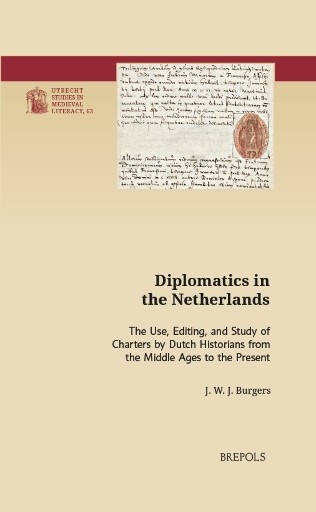
Diplomatics in the Netherlands
The Use, Editing, and Study of Charters by Dutch Historians from the Middle Ages to the Present
Charters and other administrative texts have long had the full attention of medievalists as primary sources in their historiographical work. This also applies to scholars from the Netherlands. Ever since the late Middle Ages they recognised the value of these sources included them as testimony in their historiography and gradually began to realise that charters and other documents required a specific form of textual criticism and a special way of editing. In this Dutch historians usually followed developments abroad. Sometimes as in the early seventeenth century they were ahead methodologically but for long periods they depended for new insights on developments elsewhere. This was especially true in the nineteenth century when scientific diplomatic methods and editing techniques emerged which would only be introduced and applied in the Netherlands in the next century. In the twenty-first century Dutch scholars are fully participating in the ‘digital turn’ that is creating new research tools in diplomatics.
Ultimately the history of diplomatics in the Netherlands is part of the broad development of historiography in the country and therefore a valuable aspect of the history of scholarship in general.
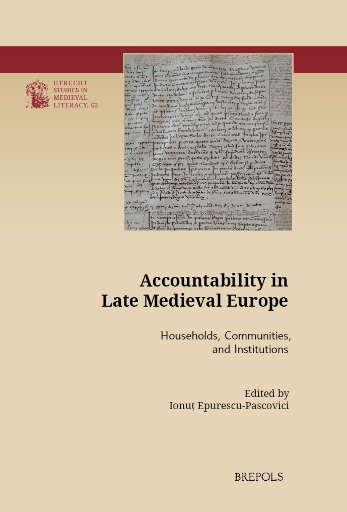
Accountability in Late Medieval Europe
Households, Communities, and Institutions
This volume brings together studies of late medieval accountability in both the domestic and the public realms. It traces practices of accountability across the social spectrum from households to small businesses to communal and regnal administrations highlighting the intersections between competing conceptions of personal and institutional responsibility. Focusing on France and Italy from the thirteenth to the early sixteenth centuries the case studies follow territorial officers consular agents and town notables co-opted into local governance from Avignon and Marseille to Tuscany and the Venetian and Genoese overseas territories. The studies explore both personal and institutional accounting registers as well as records of a textual nature such as rulebooks and inquests in an effort to reflect the range of records and procedures relied on to achieve a measure of accountability in late medieval Europe.
Supplicant Empires
Searching for the Iberian World in Global History
This volume is a collection of reflections from leading senior and junior historians regarding the merits of historical comparativism in the field of Iberian history. The first purpose of the book is to encourage a dialogue between scholars of the Iberian Empires and to foster a reconsider how they see the broader history of the early modern world in light of recent historiography. The second aim of the book is to prompt scholars of other regions in global history to consider the recent literature on the Iberian Empires anew to move beyond the tropes of the Black Legend and narrative of growth splendour and decline and to study those imbrications had connected disparate parts of the world and which the postcolonial turn has unearthed. In a series of articles and interviews contributors were encouraged to consider the role of linguistic divides in the growth of historiographical strands and to speak plainly about the possible siloes that have emerged in the field. Contributors discuss the Atlantic turn corporate cultures the Catholic adoption of Protestant ideals gender and race all while drawing on insights from scholars who work on early modern nuns the material history of sugar and coffee or those who are exploring the uses of the concept of barbarity in borderlands.
The Sanctuary of Parthenos at Ancient Neapolis (Kavala), Volume ii
Pottery, Stone Inscriptions, and Small Finds
The ancient city of Neapolis (modern Kavala Greece) was founded by Thasos in the seventh century BCE at a strategic location where the Thracian hinterlands meet the Aegean Sea. The patron deity of this North Aegean polis was Parthenos (the Maiden) a goddess often associated with Artemis and known to us through epigraphic and archaeological evidence. Her sanctuary came to light in the twentieth century during rescue excavations and yielded numerous finds most of which date from the Archaic period.
This edited volume draws together the material evidence from the Sanctuary of Parthenos with a particular focus on the ceramic wares stone inscriptions and small finds from the site. Published as a counterpart to an earlier publication in this series Amalia Avramidou’s monograph The Sanctuary of Parthenos at Ancient Neapolis (Kavala): Incised and Painted Ceramic Inscriptions from the Sanctuary and in Aegean Thrace the essays gathered here nonetheless form a stand-alone volume that sheds light on both the importance of the site as a place of cult and more broadly the role that it played within the commercial networks and cultural dynamics of the Aegean.
Medieval Livonia
History, Society and Economy of a Territory on the Baltic Frontier
The territory known as Livonia on the eastern shore of the Baltic Sea emerged as a result of the Baltic Crusades in the twelfth and thirteenth centuries. It was a region of multiple nations languages and cultures and the scene of their mutual interaction connected to the Holy Roman Empire the papal curia Scandinavia and Lithuania and mediating the Hanseatic trade with Russia. This book is a significant new study of the multiple facets of Baltic history taking in social history urban and rural culture peasant economy and literacy with novel perspectives on crusading political history and the chief agents of power notably the Teutonic Order. This first comprehensive treatment of Livonian history in English will serve as a valuable source of information for undergraduate and postgraduate students as well as a resource for studying the Baltic Crusades and crusader territories in general.
Byzantine Liturgical Books
An Introduction
The world of Byzantine liturgical book types is fascinating but also confusing. While they are central to the study and celebration of Byzantine Liturgy no one work offers an overview of their history contents and structure. This volume offers for the first time an introduction to the major types of Byzantine liturgical books their taxonomy origins development and contents.
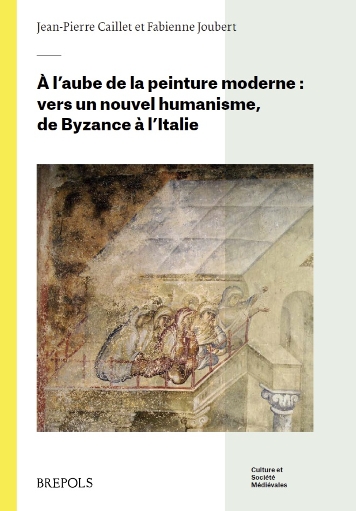
A l'aube de la peinture moderne
Vers un nouvel humanisme, de Byzance à l'Italie
Il s’agit de revisiter ici une phase cruciale de l’histoire de la peinture dans une optique bien spécifique. On se démarque en effet d’une vision ayant crédité de manière trop exclusive l’Italie des environs de 1300 d’une « révolution » ouvrant la voie à la modernité. En revenant sur ce qui a préludé à cela dans la Péninsule même et surtout en accordant une égale attention à ce qui a simultanément – ou antérieurement à maints égards – été produit dans le monde byzantin on tend à un radical rééquilibrage de la perspective. C’est alors dans sa véritable dimension que se perçoit l’évolution artistique de l’époque en lien étroit avec un contexte politico-religieux tout à fait particulier : celui d’une installation des Latins à Constantinople et dans plusieurs territoires de l’Empire d’Orient et d’un projet de réunion des obédiences catholique et orthodoxe ; avec dans ce cadre une décisive action des nouveaux Ordres Mendiants vite implantés dans tout le monde méditerranéen et développant une prédication réellement accessible au plus grand nombre étayée – chez les Franciscains au premier chef – par une imagerie traduisant la geste du Christ et des saints sur le mode le plus crédible incorporant précisément les avancées déjà opérées à cette fin dans la zone orientale.
Après un panorama historiographique faisant le point sur les positions plus ou moins anciennes et leur impact jusqu’à nos jours on aborde en premier lieu ce qu’il en a été des conceptions et fonctions dévolues à l’image trop volontiers considérées comme différentes d’un milieu à l’autre. Puis on affronte le champ de l’iconographie en propre avec les accents spécifiques qui y sont portés. Ensuite vient l’examen des divers aspects formels (et des moyens techniques mis en œuvre) ; examen non moins capital puisque ce sont le naturalisme et l’expressivité de la figure ainsi que son insertion dans un espace tridimensionnel qui visent à une communication plus efficace avec le fidèle ; cela par la forte sollicitation de ses sens pour sa profonde imprégnation de ce qui s’offre à sa vue. On peut dans cette démarche reconnaître une authentique humanisation de la foi. Et il s’avérait donc essentiel de souligner que dans cette mutation où l’image s’est trouvée investie d’un rôle majeur la contribution de la chrétienté byzantine a été aussi déterminante que celle de l’Italie.

Dacia Ripensis
Topografia e cristianizzazione di una provincia danubiana nella Tarda Antichità
La Dacia Ripensis fu una provincia danubiana la cui esistenza si data fra gli anni ‘80 del III secolo e i primi anni del VII. Il suo territorio funse da cerniera fra il medio ed il basso corso del Danubio e al tempo stesso da raccordo fra il barbaricum e l’entroterra illirico. L’urbanizzazione vi ebbe un modesto successo; cionondimeno essa favorì la romanizzazione della provincia dove la militarizzazione si manifesta invece in modo evidente grazie a quanto noto dalla Notitia dignitatum e dall’archeologia. L’attenzione per la difesa dell’area era del resto giustificata per via della pressione esercitata da popolazioni come Goti Unni Slavi e Avari che condizionarono la storia dell’intera penisola proprio attraversando la Dacia Ripensis.
Dalle fonti letterarie è noto che la provincia fu anche interessata dalla diffusione della religione cristiana le cui prime testimonianze si datano ai primordi del IV secolo. Il processo rese possibile l’ascesa di sedi vescovili assai implicate nelle dispute teologiche e nella lotta a dottrine eretiche localmente diffuse ancora nel VI secolo. L’archeologia ha permesso di riconoscere la graduale formazione di questa rete ecclesiastica che in forme monumentali è riconoscibile sia in ambito urbano che rurale. Nonostante la sua importanza questa provincia è stata finora studiata solo occasionalmente e questo volume vuole ovviare a questo problema proponendo uno studio aggiornato mirato a definire le conoscenze storiche e archeologiche necessarie alla comprensione generale della topografia provinciale così come alla contestualizzazione del processo di cristianizzazione di questa porzione dell’area danubiana.